
Strategic Training Workshops
2008 Trainings:
Mining Training with Kachin Environmental Organization (KEO)
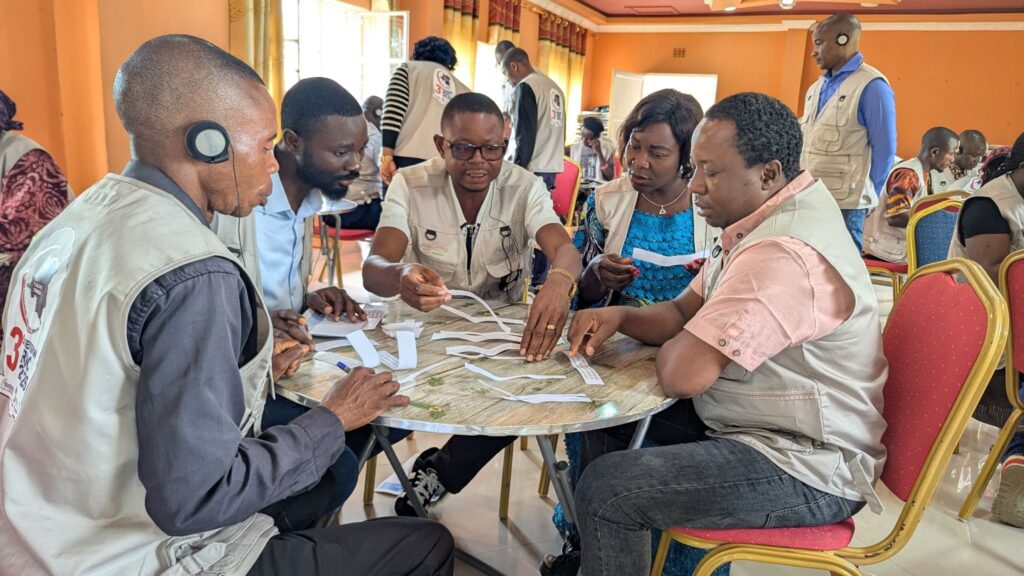
In August 2008, ERI’s Matthew Smith provided a 3-day training in Chiang Mai for participants in the KEO training program. The training program was directed by ERS-B alumni Yaw Na. The training was designed to teach activists from Burma about human rights and environmental issues. Participants came from inside Burma, especially the Kachin and Shan States. ERI gave an intensive training on the fundamentals of advocacy and campaigning. The students learned how to frame problems in their communities in terms of clear and winnable campaigns. Participants planned realistic campaigns focused at the village level to stop forced labor, to decrease child soldier recruitment, to educate women about the environment, and to reduce chemical agriculture; all problems that would otherwise go unchallenged at the village level.
Maetao Clinic Trainings
Training for Trainers Program: An Introduction to the Environment
In November 2008, a training for trainers program focusing on the environment was conducted by ERI’s Rachel Morris and the EarthRights Student Union at the Mae Tao Clinic in Mae Sot. More than twenty teachers from Mae Sot area schools attended the session, most of whom were not previously aware of such environmental concepts as Global Warming and Climate Change, or had considered the effects of their own lives on local and global environments. After learning about global warming and discussing the effects of human behaviors and resource use on the future of the Earth, participants left with an enthusiasm and interest in these most important global issues. Their spirit was backed up by their own draft plans for exploring the issues further; introducing the issues to their students (aged 4-18+) and communities; and implementing strategies for positive change at personal, local, school, and regional levels.
The aim and objective of the training:
- To provide Human Rights, Environmental and Democratize Leadership issues for Mae Tao Clinic health worker in order to promote health worker knowledge, attitude and practice.
- To promote the skills of communication and cooperation in and among the health worker in order to be able to work and advocate with governmental agency, NGOs, etc.
- To improved and strengthen networking and co-ordination in and among health workers
- To understand the relation of earthright problems and health issues

- To understand the role of health worker at the national, regional and international levels
2007 Trainings:
Alumni Trainings & Local Outreach
Training on Environmental Issues to Lahu Community, October 2007
A training on environmental issues was held in Mae Sai in October 2007. The training was conducted by Steve Tomson and Naing Htoo. It was attended by the Lahu people from inside Burma and Thailand. It included mostly villagers who lived in the mountain-forest areas and a few community workers interested in environmental issues and global warming. The goal of the training was to raise awareness of the local people about changing lifestyles in their area and current world events. The training highlighted the impacts of forest fires and clean cut forests. It also encouraged people to use traditional medicine to sustain themselves.
Network for Human Rights Documentation (ND-Burma) Fact-Finding Training, May 18-22, 2007
HRDCC, now ND-Burma, organized a training session on Fact-finding, documentation and data input and management into the software program " Martus Program”-an open-source software developed by Benetech. ND-Burma formed in 2003 in order to provide a way for Burma human rights organizations to collaborate on the human rights documentation process. The 12 ND-Burma member organizations seek to collectively use the truth of what communities in Burma have endured to challenge the regime’s power through present-day advocacy as well as prepare for justice and accountability measures in a potential transition. ND-Burma conducts fieldwork trainings, coordinates members’ input into a common database using Martus, and engages in joint-advocacy campaigns. When possible, ND-Burma also collaborates with other human rights organizations in all aspects of its work. ERI’s Naing Htoo, Partick, and Hang Gyi conducted trainings on interviewing skills, photography and report writing skills in Chiang Mai. The participants were mainly from the Lahu Women Organization, Kachin Women Association of Thailand, Burma Issue, KORD, Karen River Watch and the Pao Youth Organization. The main goal for this training was for the field fact-finder to be able to do documentation to support their organization as well as to share information in the network.
Community Management, Gender Issues and Environmental Issues (Global Warming), Nov 12-17, 2007
Three trainings on Community Management, Gender Issues and Environmental Issues were conducted by ERI’s Khun Htee, Hay Moo, Naing Htoo and Jollsy in November 2007. The training took place inside Burma. The subjects of these trainings were new for many of the participants. The training provided basic understanding of power structure and decision making through management, environmental issues, climate change, and gender relation issues in the community. It was a great learning experience for the participants, especially through the use of experiential learning techniques, discussion and presentations to reflect their community situation.


The training took place inside Burma where it was partly under controlled by the Burmese military. This limited the topics of the training and the training was designed to be very general to avoid security concerns.
The aim of this six day training was to create awareness with alumni community and leaders in the ceasefire area. The training provided:
- An introduction to project management at the community level with a focus on conducting needs assessments, management decision making, and dealing with conflict
- An introduction to different forms of community governance and power structure
- A basic introduction to gender concepts, issues, and skills to undertake gender analysis in community programs and projects
- An introduction to the causes and impacts of climate change and steps to take to reduce green house gas emissions and promote alternatives at the community level
- To identify their need, problems that they are facing, and to gain awareness of what is happening in their community so they can find ways to resolve it
2006 Trainings:
ERI’s Trainings on the Asia Development Bank (ADB)
In 2006, ERI piloted 7 trainings on the Asian Development Bank for Burma activists, helping to build a strong coalition of leaders and NGO partners that will ensure that ADB involvement in Burma requires a negotiated decision-making process and informed consent of the people affected by development projects.
The trainings provided 1) A basic understanding of the ADB’s general structure, operations, and impact on the Greater Mekong Subregion (GMS); 2) an overview on the ADB’s involvement in Burma though the GMS program; and 3) a basic understanding of ADB lobbying skills for effective strategies both inside and outside the ADB with a focus on Burma and the GMS program.


In total, over 155 activists from Burma have attended these 7 trainings, representing over 50 local civil society organizations. The trainers included Alisa Loveman from ERI’s Burma Project Team, Jelson Garcia fro the Bank Information Center, Boy Neura from the NGO Forum on the ADB, and guest speakers such as Stephanie Fried, a senior researcher of Environmental Defense, and Titi Soentoro, founder of NADI, an NGO headquartered in Jakarta with a focus on public finance.
The trainings combined presentations and group activities. To explain the operations and influence of the ADB in the region to the group of grassroots activists, we approached each topic with a Burma focus and included many examples and case studies. In addition, we developed small group activities to make the concepts easily accessible to our participants.


We have seen many positive outputs from these trainings. Participants have conducted briefings on the ADB involvement in Burma at large gatherings of civil society organizations and political opposition groups, both inside and outside Burma. Other participants have also published stories on the ADB and Burma in the local media. Recently, we have also developed an ADB training manual as a reference for activists who want to conduct their own trainings on the ADB.
These trainings have improved basic understanding among Burma activists of the ADB’s operations and its involvement in Burma via the Greater Mekong Subregion (GMS), and provided concrete examples of advocacy techniques for lobbying the ADB.
Fact Finding Training with Lahu National Development Organization - 2006
Earthrights conducted two training workshops with the Lahu National Development Organization (LNDO), focusing on the human rights, environmental and livelihood impacts of Chinese companies operating in Burma along Mekong River. These companies, under the supervision of the Burmese military regime, have engaged in mining and logging, as well as dredging and straightening the Mekong River to make way for shipping. The Upper Mekong Navigation Improvement Project, now in full swing, is part of the Greater Mekong Subregion (GMS) Economic Cooperation Program, involving Burma, Cambodia, Laos, Thailand, Vietnam, and Yunnan province of China. Taking advantage of the conflict status of the area China together with Burmese and other business partners are exploiting the situation to huge profit but still local people in this area are very little concerned for their rights and for their environment.
LNDO is one of a number of groups that are working toward change in these area by documenting and exposing human rights violations and environmental abuses in this area. Our workshops trained 20 participants from the LNDO in fact-finding and the general earth rights issues associated with this kind of military-controlled "development."
The Public Interest Strategic Litigation Workshop, March 28-30, 2006, UlaanBaatar, Mongolia
In March, 2006, ERI’s Burma Project travelled to UlaanBaatar, Mongolia to participate in two workshops at the Open Society Forum, in partnership with Global Rights in Washington DC and the Center for Human Rights and Development (CHRD) in UlaanBaatar. “The Public Interest Strategic Litigation Workshop” was attended by approximately 35 Mongolians, including Mongolian judges, lawyers, advocates, and human rights activists, as well as ERI Program Coordinators.
The workshop was part of an ongoing CHRD/Global Rights project for promoting strategic human rights advocacy among Mongolian NGOs, meant to support local pro bono public interest work in the area of human rights and the environment. ERI’s Lillian Manzella presented on using international law in domestic struggles for justice, principles of corporate social responsibility and accountability, and ERI’s groundbreaking lawsuit against Unocal Corporation for abuses committed in Burma.
The Environmental Strategic Advocacy Workshop,
April 4-7, 2006, UlaanBaatar, Mongolia
In April, 2006, ERI’s Burma Project travelled to UlaanBaatar, Mongolia, to participate in the Environmental Strategic Advocacy Workshop, organized jointly by DC-based Global Rights and UlaanBaatar-based Center for Human Rights and Development (CHRD). Approximately 35 local community leaders, politicians, lawyers, and activists attended the workshop. EarthRights International conducted a full-day training on fact finding and documentation of earth rights abuses, and campaigning for earth rights at the local and international level. Other topics covered included citizens’ participation within the Mongolian legal framework, an introduction to citizen-centered advocacy, issue identification, leadership and organizational development, community organizing, and strategic litigation. Participants concluded by devising a detailed plan of action on local environmental issues.
2005 Trainings:
Fact Finding for Lahu National Development Organization
In July 2005, Naing Htoo and Chana Muang conducted a two-day training in Chiang Mai focusing on Documentation for Lahu National Development Organization (LNDO) fact-finding personnel. The purpose of this training was to support LNDO’s research on the Lao- Burma Mekong River area. At the time of the training, reef blasting to improve river navigation was being planned and LNDO was documenting the impact on people and environment along the river area.


Join EarthRights International on Facebook