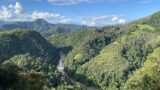
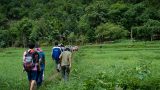
The EarthRights School Mekong students recently returned from two months of field research. The students’ fieldwork provided an opportunity to test the skills they learned during their first four months of the school’s intensive seven-month training program.
The EarthRights School Mekong brings together individuals from each of the six countries in the Mekong region: Burma, Cambodia, China, Laos, Thailand and Vietnam. This year’s class includes thirteen students from a variety of backgrounds, with students specializing in human rights law, public health, engineering, children’s rights, disaster relief, and environmental science. The students joined the school in June 2010.
The following excerpts are from the students’ reflections on their first impressions of the school after completing orientation:
In my opinion this here is not only school to come for study to get knowledge and leave. It’s a big home, there are many cousins living together. Although someone may leave here, they’re always still connected.– Lao student
It is very important for us to meet each other to gain experiences, share issues and bring our voice to our governments and agencies that support projects around the Mekong region and impact marginalized communities.-Cambodian student
In conclusion, I strongly believe that, we, the Mekong school students in 2010, will support and cooperate in a big family to study hard, share together, and build a good relationship to protect our Mekong River.- Vietnamese student
Throughout the summer and fall, the Mekong School students received training on team building, gender awareness, conflict resolution, cross-cultural communication, research and data collection tools, interviewing skills and research ethics. They also participated in courses covering topics related to human rights and environmental protection in the Mekong region, including the impacts of large hydropower dams, the rights guaranteed to dam-affected communities, the Asian Development Bank’s complaint mechanism and decision-making process, the negative impacts of mining and mechanisms to address them.
Students were reminded of the real world implications of their coursework through a series of field trips. For example, they took a trip to the Salween River to learn about the impacts of the Salween Dams along the Thai-Burmese border. The following excerpts are from students’ reflections on what they learned during the Salween trip:
Many people of the Salween basin are stateless persons; they don’t have Thai citizenship. This situation means they don’t have power to protect their rights. [. . .]
For the people who affected by the dam, they should have rights to protect themselves. They also have Thai law and international law. When someone talks about affects from the project to people, they need to include all people. This situation relates to human rights, not only political rights, so stateless people issues must be brought up to consider and enhance the value of everyone equally.
– Thai student
The villagers realized the effects from dam might cause many conflicts. With love and compassion of their indigenous livelihood, home land, and tradition, they are strongly against the dam project. They tried to do whatever they can to stop the project. [ . . . ]
I have learned valuable new knowledge on this trip so that when I go back to my country in the near future, I will apply those things that are suitable for the situation in Laos as much as I can.
– Lao student
In addition to the Salween trip, students also visited a power plant, the Pak Mun Dam, an irrigation project and a potash mine. At each site, students learned from community members about the impacts of the projects on their livelihoods, strategies they used to oppose the projects, and the need for stronger legal protection for affected people.
Having now completed most of their coursework and their field research, the students are busy preparing reports and presentations on their research. The effort is the culmination of their studies and, for many students, the starting point for the work they will do when they return home.