-
Training peace and environmental advocates for Burma.
An eventful three months have passed at the Burma school; finally getting underway in mid-October after unforeseen security delays, the classes are now in full swing and the participants are progressing rapidly. The security situation, instead of hampering the cohesion of our group, has galvanized team building and even become a source of pride. The participants understand it as part of the job for a human rights defender.


In the first weeks the participants benefited from an intensive introduction to critical thinking. The two week seminar focused on shifting learning from memorization to a participatory process in which forming opinions and asking questions are central. This was complimented by a English as a second language for human rights defenders class which is ongoing and integrated with the simultaneous seminars. The classes and seminars over the first few months have attempted to provide the participants with a view of the world outside of Burma. We have discussed geography, history and politics in a variety of different countries. The participants have been assigned a country to study over the course of the year that they will relate to in the different classes.
This was followed by a class on the environment. Khin Nanda introduced the students to the basic concepts of the environment. Her class covered important subjects such as biodiversity and the functioning of ecosystems. The ESL classes were geared towards providing the vocabulary necessary for understanding the environment as well as adding further learning activities.
The government class provided an introduction to the basic principles of governance. Through participatory activities the participants have gained knowledge about core concepts such as the state, that nation, power, sovereignty, legitimacy, the social contract, constitutions, competition, nationalism and a variety of forms of national government. The participants were able to research these concepts related to their assigned country study. Again, the ongoing English language for human rights defenders class provided essential vocabulary and further application of the premises of governance. During the government class the participants had the opportunity to attend the Mekong School’s student presentations. This provided a good lesson on presentation skills, a chance to ask questions as well as an occasion to make friends and contacts concerned with the environment and human rights throughout the region.
It is not all hard work and study for the students at ERS-Burma. We have had a competitive series of staff versus student and alumni soccer matches as well as badminton, table tennis and other sports activities. The Burma school participants were also able to get out and enjoy the beautiful Loy Kratung festival in Chiang Mai. We have enjoyed some delicious weekend meals together and we even had a day at the local reservoir where we had more food, a chance to mix with the Mekong School students and lots of swimming and other activities.
Following the government class, the participants’ focus turned to human rights. The human rights course introduced the basic concepts such as natural rights and their history, the Universal Declaration of Human Rights and other human rights treaties, national implementation, and advocacy strategies. All the while, the participants were encouraged to share their own experiences as we linked human rights concepts and law to their local circumstances in Burma. The ESL classes added to the experience with activities on global and regional social movements and media fluency. The participants have even written letters of support to other human rights defenders in other countries and have written powerful letters for Amnesty International’s letter writing campaigns. (We have uploaded a few sample letters from this workshop: one to Prime Minister al-Maliki and the other to President Deby of Chad regarding the human rights situation in N'Djamena.)
The last week of classes before the break has introduced the idea of “Earth Rights” to the students. The link between human rights abuse and environmental degradation is not an abstract concept for the participants form inside Burma – it is fact of life. The students own experiences shaped the class as Daniel also provided insight on the basic principles of environmental protection and drew comparisons to human rights protection. This was followed by a detailed discussion of the Yadana pipeline case facilitated by Naing Htoo. The students have selected case studies to present after the year end break.
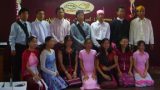
Finally, the students have attended the recent Mekong School’s graduation to show support for their future colleagues in the region. The pleasant evening gave the Burma participants something to look forward to when they will also graduate and become alumni of this program. The following day was a year end celebration with sport and games organized all day. In the spirit of the festive season, a nice dinner and a graduation party ensued.