
The international community expressed condemnation today over the conviction and sentence in the trial of Burmese pro-democracy leader Aung San Suu Kyi. Ms. Suu Kyi was sentenced to 18 months of house arrest, after a Burmese court found her guilty of violating security laws on Tuesday August 11, 2008. Suu Kyi was charged under the draconian State Emergency Act (also known as the Law to Safeguard the State against the Dangers of Those Desiring to Cause Subversive Acts).
EarthRights International (ERI) is delighted that ERI’s Co-Founder and Executive Director, Ka Hsaw Wa, has been selected to receive the prestigious Ramon Magsaysay Award for Emergent Leadership in 2009. Ka Hsaw Wa will receive the award, also known as Asia’s Nobel Prize, at the Magsaysay Award Presentation Ceremonies on Monday August 31, in Manila, Philippines.
The American Association for the Advancement of Science (AAAS) launched a new coalition bringing together scientific associations/societies/academies, individual scientists, human rights organizations, and activists with a goal of furthering scientific support for human rights issues. Opening the launch were three distinguished speakers, including Mary Robinson, former United Nations High Commissioner for Human Rights, and former President of Ireland. EarthRights International Burma Project Coordinator Matthew Smith spoke on a panel on the role of science in ERI’s acitivities. ERI Campaigns Coordinator Paul Donowitz welcomed the coalition, remarking that “the scientific community has tools and methodologies that can assist in the promotion and protection of human rights. We can learn much from scientists, and their stringent process which will help increase corporate accountability for human rights and environmental abuses, especially in the extractive industries. We look forward to building strong relationships with the scientific community.”
The U.S. State Department’s 2007 Country Report on Human Rights Practices in Burma, released earlier this week, underscores the duty of multinational corporations in Burma to work against the pervasive human rights abuses of the military regime, as well as the need to stop any new multinational investment projects. The report documents the continued systematic human rights abuses committed against the people of Burma by the State Peace and Development Council (SPDC) through the military, security services, and regime-sponsored militias. In particular, abuses associated with the brutal crackdown of pro-democracy protesters in September and October of 2007 are highlighted in the report.
|
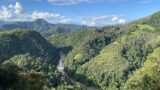
NUEVO JERUSALEM, Peru -- Tomás Maynas Carijano strolled through his tiny jungle farm, pinching leaves, shaking his head. The rain forest spread lushly in all directions -- covering what oil maps call Block 1AB.
Some members of the Peruvian Indian community of Antioquia, which practices slash-and-burn cultivation, are among those suing California-based Occidental Petroleum. |
| Read more about ERI's case against Occidental Petroleum |
In the new book, Myanmar: The State, Community and Environment (2007, Canberra: Asia Pacific Press/The Australian National University) edited by Trevor Wilson and Monique Skidmore, ERI Burma Project Coordinator Matthew Smith contributed a chapter on “Environmental Governance of Mining in Burma.” The chapter includes a detailed case study of the Vancouver-based Ivanhoe Mines’ joint venture with the military regime in Burma, and concludes that environmental governance of mining in Burma is a top-down system, devoid of environmental protection and dominated by the elemental purpose of securing revenue.
The book also includes a chapter by former ERI staff and research consultant Dr. Ken MacLean, Assistant Professor of Development and Social Change at Clark University, which draws on field data collected by ERI in Eastern Burma. Entitled “Spaces of Extraction: Actually Existing Governance along the Riverine Networks of Nyaunglebin District,” the chapter explores the question of how conflict zones become governable spaces in the context of military rule, natural resource extraction, and “regulated forms of violence.” It analyzes the militarization of everyday life that has emerged with the regime’s rising business interests in the natural resources of eastern Burma. These business interests include gold mining and the construction of the Kyaut Nagar hydropower dam.
On September 28th, the Ambassador of Slovenia sent a request to the President of the UN Human Rights Commission requesting the Fifth Special Session, entitled "The Human Rights Situation in Myanmar," which was promptly supported by 53 member countries. EarthRights International, as a human rights organization with Special Consultative Status to the UNHRC, submitted this letter urging the adoption of an action-oriented resolution. At the very least, the resolution must provide a fact-finding mission to investigate recent gross human rights violations committed by the SPDC in response to peaceful demonstrations as well as an independent monitoring team mandated to address the broader human rights situation in Burma.
Read ERI's full written statement.