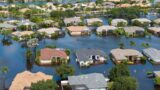

August 14, 2008 -- Three months on from Cyclone Nargis, the disaster has dropped out of international headlines, but the humanitarian situation on the ground continues to be dire with on-going assistance critically needed. A brief update was compiled by the Applied Research Centre in Human Security. Click here to read the latest.
Related News:
"Lifting the Bamboo Curtain" (The Atlantic Monthly)
"DROWNING: Can the Burmese People Rescue Themselves?" (The New Yorker)
---
July 2008
Despite the large amount of aid being given to the Burmese government, not all cyclone victims are receiving it. The junta has specifically discriminated against the Karen ethnic group by not only withholding aid but also by displacing them due to an ongoing military campaign. In general, the junta has required victims to work, to join the military, or to vote in order to receive aid. Furthermore, there is a significant portion of the aid that has simply disappeared into the pockets of the Burmese military and their associates.
United Nations' Office of the Coordination of Humanitarian Affairs Reports Joint Assessment Team Completed Data Collection
Some 250 members of the Post-Nargis Joint Assessment (PONJA) team
returned to Yangon on June 20th after completing data collection in 30 affected
townships across Yangon and the Ayeyarwady Delta. Over the next few
days, the team continued with the next stages of data entry and
early analysis. Preliminary findings and a progress report was
presented at the ASEAN roundtable meeting in Yangon on June 24th. These
will also inform the revised Humanitarian Appeal, which will be
launched in Geneva in July. The PONJA report is planned for release on
18 July.
Read the full story here.
ERI Burma Project Field Staff Update (May 30, 2008)
EarthRights School alumni organized fundraisers and raised nearly 200,000 Baht for Cyclone Nargis victims.
JUNTA STILL OBSTRUCTING CYCLONE RELIEF
EFFORT; CHEVRON STILL COMPLICIT IN ABUSES
After Cyclone Nargis ravaged Burma’s Irrawaddy Delta on May 2-3,
millions of people are still in desperate need of food, water, and shelter.
Some emergency aid is finally reaching the hardest hit areas, but it is still
infrequent and in very small quantities, and the military continues to obstruct
the relief effort.
U.S., French, and British naval vessels have been located
off Burma’s
coast for two weeks, waiting to deliver large quantities of aid to the hardest
hit areas of the Delta. According to U.S. officials, the USS Essex
waiting offshore has the capacity to deliver aid quickly and efficiently
through amphibious vehicles and personnel skilled in relief operations. All three vessels have been rejected on the grounds
they are military, not civilian.
While in Rangoon,
Admiral Timothy Keating of the U.S. Pacific Command made an offer in person to
use 24 medium to heavy-lift helicopters to transport 250,000 pounds of relief
per day from the central distribution point in Rangoon to the hardest hit areas. According
to Admiral Keating, “I assured our Burmese colleagues that we would do this
without fingerprint…We would come in, be entirely self-sufficient…We offered
them the opportunity to put their own military members or civilians, their
choice, on our airplanes, on our helicopters. And I delivered a written letter
of invitation to have a Burmese delegation visit the USS Essex off the coast,
should they so choose, so as to observe our operations.”
These gestures and offers
were likewise rejected by the Burmese authorities.
The New Light of Myanmar, the
country’s largest publication known to reflect the junta’s line of thinking,
claimed on May 29 that the
“Myanmar people are capable enough of rising from such natural disasters even
if they are not provided with international assistance.” The paper went to
reflect a tragic lack of knowledge for the gravity of the disaster at hand and
a disturbing lack of respect for the value of an internationally coordinated
relief effort, claiming “Myanmar
people can easily get fish for dishes by just fishing in the fields and
ditches…In the early monsoon, large edible frogs are abundant.”
Meanwhile, some survivors are
suffering from malnutrition and searching for anything edible in water infested
with decomposing corpses.
The Kyemon newspaper, another
government mouthpiece, said in a Burmese-language editorial that the 2.4
million victims of Nargis “could stand by themselves” but then went on to
criticize the U.N. “flash appeal” to raise US$201 million for the relief
effort, claiming inconsistently that the amount is not enough.
The junta has repeatedly
claimed there is no need for a relief effort, attempting instead to move ahead
toward a reconstruction phase, for which the government is requesting US$11
billion. It is unknown how the regime arrived at that figure.
On the ground, the few relief
workers who have unfettered access are confirming the worst. Relief teams
describe decomposing corpses and large numbers of survivors in urgent need of
basic necessities, like food and shelter, and the U.N. claims that at least one
million survivors have still received no aid.
The official figures of the number of dead and missing
has not changed since May 16: 77,738 are reported dead and 55,917 missing. These
figures, nearly two weeks old, were widely regarded as conservative when they
were first released by the military regime in Burma. By now they are grossly
inaccurate. EarthRights International fears the death toll is far higher.
In the worst-off areas, relief units claim seeing no
survivors over vast stretches of land, and in some areas of the Delta there are
no structural signs whatsoever of previous settlement.
JUNTA CONTINUES WITH POLITICAL OPPRESSION
In the midst of this immense disaster and against
international pressure, the regime extended the house arrest of pro-democracy
Nobel laureate Daw Aung San Suu Kyi, who has been held without trial for 12 of
the last 18 years. The regime also proceeded on May 10 and May 24 with an
already controversial national referendum on a draft constitution, officially
announcing on May 29 that voter turnout was 98.12 percent, with 92.48 percent
of voters in favor of the constitution.
Junta leader Than Shwe made a statement today on state
television that the constitutional draft has been adopted and will take effect
in two years, once a parliament is convened after scheduled elections.
Poor timing aside, the constitutional drafting process
and the voting process were widely reported as egregious and blatant insults to
freedom and fairness, and in terms of environmental and human rights - what we
call earth rights - the draft constitution itself is problematic: It would politically
entrench the military for at least ten years, lacking basic checks and balances
against military rule, and there are no explicit provisions for land or
property rights, compensation for expropriated land, or protection of
traditional forms of natural resource management. This means that ethnic
populations who happen to live in resource rich areas would still lack basic
protections from large and small-scale natural resource extraction projects,
and would likely continue to face earth rights abuses at the hands of the
military and its corporate partners.
CHEVRON STILL COMPLICIT IN ABUSES
Human rights abuses connected to natural gas
development in Burma
have been occurring for years on a massive scale. The oil giants Chevron and
Total are partners with the junta in the controversial Yadana natural gas
project, the subject of ERI’s recent report, The Human Cost of Energy,
released just prior to Cyclone Nargis. The report documents the companies’
ongoing complicity in serious human rights abuses connected to the project,
including forced labor, murder, rape, and torture; abuses which local people
have endured for seventeen years. The Human Cost of Energy is the first comprehensive
report on conditions in the Yadana pipeline region since Chevron acquired Unocal’s
interest in 2005, and it describes Chevron’s continuing legal liability
associated with abuses in the pipeline region.
Natural resources such as natural gas, timber, gems,
jade, and other mineral resources are the regime’s largest sources of revenue.
Chevron’s Yadana gas project is the single largest, netting the junta
approximately US$1 billion per year.
ERI was present at Chevron’s annual shareholder
meeting in San Ramon, California,
held on Wednesday, May 28, to raise concerns about the company’s human rights
record and its role in Burma.
While commending the company on its US$2 million donation to organizations
devoted to Nargis relief, ERI representative Naw Musi and ERI Campaigns Coordinator
Paul Donowitz challenged CEO David O’Reilly on the company’s human rights
record in Burma,
and called on the company to use its influence to pressure the military regime
toward full cooperation with the international relief effort.
Chevron denies having influence with the regime, and
they continue to maintain they are of benefit to the people of Burma.
***
ERI Burma Project Field Staff Update (May 20, 2008)
DISASTER RELIEF EFFORTS
Many of the affected areas have yet to be reached by aid agencies
as the Burmese regime continues to block most international aid efforts despite
mounting pressure. The regime is also restricting Burmese-based disaster relief
efforts from other parts of the country aimed at assisting the affected
population at-large, allowing only members of the military to send supplies and
funds to their families in the affected regions.
The regime has allowed a few Chinese firms and other companies
to aid in rebuilding efforts but this provides little consolation to the local
people who fear their land will be confiscated in the process by these
reconstruction companies or the regime itself.
Moreover it comes as no surprise that military facilities destroyed
by the cyclone, such as Highgyi
Island where the regime’s
navy is based, are receiving the lion’s share of the regime’s disaster relief
resources.
Local people also cite Burmese radio and news stories
as downplaying the damage caused by the cyclone.
PHYSICAL AND SOCIAL
DAMAGE
It is now evident that the country’s lagging
telecommunications infrastructure prohibited many people from taking necessary
precautions as the storm approached the coast. Local people often cannot afford
newspapers, radios, or televisions and as such news is slow to reach the
majority of the population, especially in remote/rural areas. Moreover poor
electrical connections and the high cost of oil for electrical generators are
also seen as major reasons these areas were caught unaware. This lack of information combined with the timing of the storm has led to
large numbers of orphaned children -- the storm hit during the middle of the workday
when many parents were separated from their children and families.
The physical damage is so wide-spread that entire villages
have been completely wiped out, leaving behind no evidence of their existence.
Water levels did not recede for several hours after the storm, drowning many
people who might have otherwise survived. Aid workers and persons traveling
inside the Irrawaddy Delta report that debris and dead bodies have yet to be
cleaned up from many areas, especially rice fields. In fact the entire food
infrastructure of the Delta has been affected – rice fields,
salt fields, fisheries and rice production centers were all heavily damaged by
the storm.
Diarrhea, skin diseases, fungal infections, and water-borne
diseases are spreading quickly in these areas where clean-up efforts have also been
devastatingly slow. Additionally the long-term psychological effects and
emotional trauma from the disaster have yet to be addressed. One survivor told
ERI that living with the sight and smell of dead bodies has made him "unable to eat properly or even want to
touch meat."
---
Related News:

Click to view hi-res map
|
|
|
OLDER NEWS ARTICLES:
|
---
---
---
Latest Update from Burma Partnership (Wednseday, May 21, 2008)
Dear Friends,
There has been an
enormous international response to the devastation of Cyclone Nargis, which hit
Burma 18 days ago. Sadly, we cannot
report that the Burmese military regime has responded
appropriately.
SPDC
response
The military regime has insisted that it is
handling the crisis itself. It is painfully clear to the rest of the world that
the disaster is of such magnitude that no single institution could possibly
claim that it can cope alone. Much of the huge flood of aid that has been sent
by the international community is currently languishing in Rangoon airport, in ships off the coast of Burma,
and in depots all over the world, just waiting to be deployed.
While
obstructing the much-needed influx of aid and expertise, the leaders of the
regime have staged ostentatious ceremonies to hand out minimal amounts of aid to
a fraction of those who so desperately need it. Some reports suggest that ethnic
Karen are being denied aid in favour of ethnic Burmans. There have been concerns
over the misappropriation of aid with reports suggesting that materials and food
sent as aid have been sold on the black market in Rangoon. The Ministry of Social Welfare, Relief
and Resettlement has announced in state-run media that complaints regarding the
misappropriation of aid are to be filed with them, and that those found guilty
will be charged.
Refugees have been forced out of their shelters and
threatened with forcible relocation. The situation is desperate and the Burmese
authorities clearly cannot be relied upon to deal with it effectively.
Democratic Voice of Burma cites one refugee as saying ‘we get no international
aid, we only hear about it… we have nowhere to stay and are living on the
streets, and the children are suffering from dysentery.’
In some areas
in Rangoon and Delta authorities tried to lure the people to give ‘yes’ vote on
May 24th in exchange of aid. On 14 May, authorities told people in Shwe-pyi-thar
satellite town in outskirts Rangoon to cast ‘yes’ vote on May 24 as they
distributed rice soup to the people. On May 15th, authorities came with cooking
oil broker to sell oil at discount rate and told customers to cast ‘yes’ vote on
May 24th.
Response of the people of
Burma
Monks, Burmese film stars and civilians
have been driving down to the Irrawaddy Delta with whatever supplies and
monetary donations they can gather and they have been able to reach to most
vulnerable groups in far remote areas of cyclone hit Delta that international
aid teams are not yet able to reach. However, in many cases they have countered
the authorities preventing them from helping the victims, reasoning that all aid
must be channelled through local officials. The SPDC’s suspicion of monks, who
played a pivotal role in last years uprising, has meant that they are being
subjected to threats and intimidation for their efforts to help.
Members
of Myanmar Medical Services, the association of private doctors in Burma,
have organised and mobilised themselves. These doctors have gone to the affected
area of their own volition and on a voluntary basis, ignoring SPDC edicts. The
enormity of the crisis facing them is impossible for them to tackle without
international aid and expertise – which is waiting so
close.
UN
statement
On the 16th May, the UN stated that,
although there had been some positive developments in the days before, a
‘substantive shift from the government’ was still needed. It stressed that the
size of the disaster is such that the humanitarian aid mission requires absolute
cooperation. The regime’s stance of non-cooperation has extended so far as to
refuse to speak to UN Secretary-General, Ban Ki-moon – a stance that may cost
the lives of thousands. Aid is now beginning to trickle through, but the fact
remains that critical needs are simply not being met at the level
required.
The UN further reported that the damage wreaked by the storm
was worse than that caused by 2004’s tsunami, and that rehabilitation costs are
estimated to be US$ 243 million. The 82,000 square kilometres affected (an area
the size of Austria)
constitute the ‘rice-bowl’ of Burma, and the whole country’s
food-security has been seriously jeopardised. Rice must be planted within the
next 40 days in order to yield the next due harvest: the paddies are currently
swamped with seawater and polluted with the corpses of humans and animals; the
region needs farmers, machinery, livestock and 900 tonnes of salt-resistant
rice-seed.
INGOs
positions
The SPDC’s reaction to the cyclone has meant
that UN agencies and INGOs have had to be creative in their approach to getting
aid and expertise into the country. The role of the private sector has proved
invaluable, for instance. International companies have used their infrastructure
to deliver free products and aid. Many of their local staff have been sent to
the delta, but they are hugely overworked and without the training or experience
to deal with such a traumatic situation.
Pre-cyclone relationships
between the xenophobic regime and international organisations seem to be
affecting their levels of cooperation. The UN has been very frustrated by the
delays in allowing its agencies access, whereas Save the Children, which has
been operating in Burma for some time, has had
relatively little difficulty, and now reports that it has a functioning
logistics team in.
The International Federation of Red Cross and Red
Crescent Societies (IFRC) has called the situation ‘overwhelming’. The priority
is to get more aid into the remote areas of the delta, and that means getting in
foreign aid and expertise. The IFRC claims to have 27,000 local volunteers on
the ground, but without suitable logistics and infrastructure this significant
manpower is still unable to reach much of the affected area and the thousands of
people who have yet to receive any assistance.
International
response
The international community has reacted
strongly to what Britain’s David Miliband has termed
the military regime’s ‘malign neglect’ (
http://news.bbc.co.uk/2/hi/uk_news/politics/7394699.stm). The French Foreign
Minister, Bernard Kouchner, proposed that there should be a UN resolution
compelling Burma to accept outside aid. This was
strongly opposed by RussiaChina, as well as several other
countries. Kouchner invoked the notion of the Responsibility to Protect (R2P) –
the doctrine, recognised by the UN in 2005, that the international community has
a duty to intervene if a government fails to uphold its responsibilities towards
its own citizens.
R2P is supposed to apply to cases of genocide, war
crimes, ethnic cleansing and crimes against humanity. There were calls for this
principle to be applied with regard to Burma even before the crisis of the
cyclone (
http://www.responsibilitytoprotect.org/index.php/pages/1182). Debate now
rages over whether forcing a country to accept a vast humanitarian aid effort is
a misapplication of the doctrine. For it to be applied, the legal case must be
made for the ruling regime’s neglect to constitute a ‘crime against humanity’ –
and it must be made fast.
The US, UK and France have all hinted at the
possibility of forcing aid delivery unilaterally. May 17th was proclaimed a
Global Day of Action, with activists around the world calling for decisive
action to be taken to get aid to those in need, whether with or without the
approval of the Burmese military regime. There has also been debate over the
possibility of a military intervention (
http://www.time.com/time/world/article/0,8599,1739053,00.html), although the
possible ramifications of this would need to be scrutinised. Diplomatic efforts
are currently concentrated on the issue of access to the more remote areas of
the delta.
Analysts have claimed to see shifts in the normal political
dynamics in Burma as a result of the cyclone.
Ministers sent to the delta from Nay Pyi Daw have a more immediate understanding
of the extent of the problem, and are said to be ignoring some commands ‘from
the top’. According to some, this decentralised decision-making has granted an
element of uncertainty to what has hitherto been regarded as a system of
immutable rigidity.
and
Referendum
The referendum to approve the regime’s
‘National Constitution’ was held on May 10th amidst gross injustice and abuse of
human rights. On May 15th, the junta announced that 92.4% of the 99% turn-out of
eligible voters voted in favour of the constitution that serves mainly to
legitimise its rule. Burmese opposition groups and international human rights
groups have unreservedly condemned these results (
http://hrw.org/english/docs/2008/05/17/burma18862.htm).
In
Solidarity,
The Burma Partnership
Secretariat
---
ERI's Recommended List of Aid & Disaster Relief Organizations
-
The Mae Tao Clinic, which provides
free medical care to refugees, migrant workers and internally displaced persons
is directed by Dr. Cynthia Maung, an ethnic Karen doctor who has received
numerous international humanitarian awards and recognitions. The clinic
is working with several local organizations inside Burma and have assured us that all
donations they receive will go directly to cyclone relief.
- Save
the Children, this is a major international humanitarian organization
with a long history of programs in Burma, and many local staff.
They have a good reputation for operating inside Burma and can absorb large
donations.
-
World
Vision has over 500 staff in Burma and is particularly focusings
its efforts on assisting children and families.
The following smaller but highly effective organizations are appropriate
for smaller donations:
- Partners Relief & Development has been working literally day and night to do what we
can to bring help and hope to the tens of thousands affected by this disaster.
They have determined through contacts on
the ground in Burma that the most cost efficient way is for the supplies to be purchased
in Burma, which creates a significant cost
savings by not transporting items across the border. Therefore, they've primarily
sent cash in with and to trusted contacts who regularly report back with status
reports. Here is a synopsis of their work to date:
•Sent in 15,000
lbs of Vitameal for food needs
•Sent in 100
rolls of plastic sheeting for shelter
•Sent in more
than $100,000 USD for food, shelter, medicine
•Sent in more
than $17,000 in communications equipment
•Helped develop
a network of 120 pastors and leaders who are personally entering the delta
region to bring relief and hope
•Created a
network with an NGO on the ground in Rangoon
to coordinate funds transfers, relief distribution and communications.
•Sent in
Partners staff and volunteers to assist in coordinating the response on the
ground inside the country.
Another truck
will go overland into Rangoon this week with water purification sachets to give 27,000 people potable water
for a month and other specialized gear for large volume water purification.
-
World Aid is sending water purification tablets directly inside Burma, and 100%
of your donation will be used for this purpose. You can donate to World Aid
through www.uscampaignforburma.org,
click on the "Donate" link and put "Water Purification" in
the "Name" box under the header of "In honor of". (If
you are interested in making a larger donation to one of these two programs,
please contact them first and make sure that they have the capacity to absorb
it at this time).
-
Global
Health Access Program supports direct medical care to refugees on the
border and within Burma
through their Backpack Medical Team. GHAP is organizing a cyclone relief
effort now and intends to provide direct aid to cyclone victims inside Burma. Donate online -
please specify in the purpose section if you want your donation to be targeted
to cyclone relief.
- Worldwide Impact Now (WIN) - 100% of the funds will be transported
directly to affected communities through a system of couriers traveling into Rangoon and the Irrawaddy
River Delta region. Please make a direct wire transfer to the
organizaiton's bank account:
Account Name: TIMOTHY SCOTT HEINEMANN
Bank: Bangkok Bank, Tha Pae Branch, Chiang
Mai,Thailand
Account Number: 2514621271
Swift Code: BKKBTHBK
For further details, please feel free to contact Worldwide Impact Now
directly:
Worldwide Impact Now (WIN)
30802 Coast Highway SPC F20
Laguna Beach, CA 92651
(913) 240-1627 (US Blackberry)
+66892702969 (Thai Cell)
|