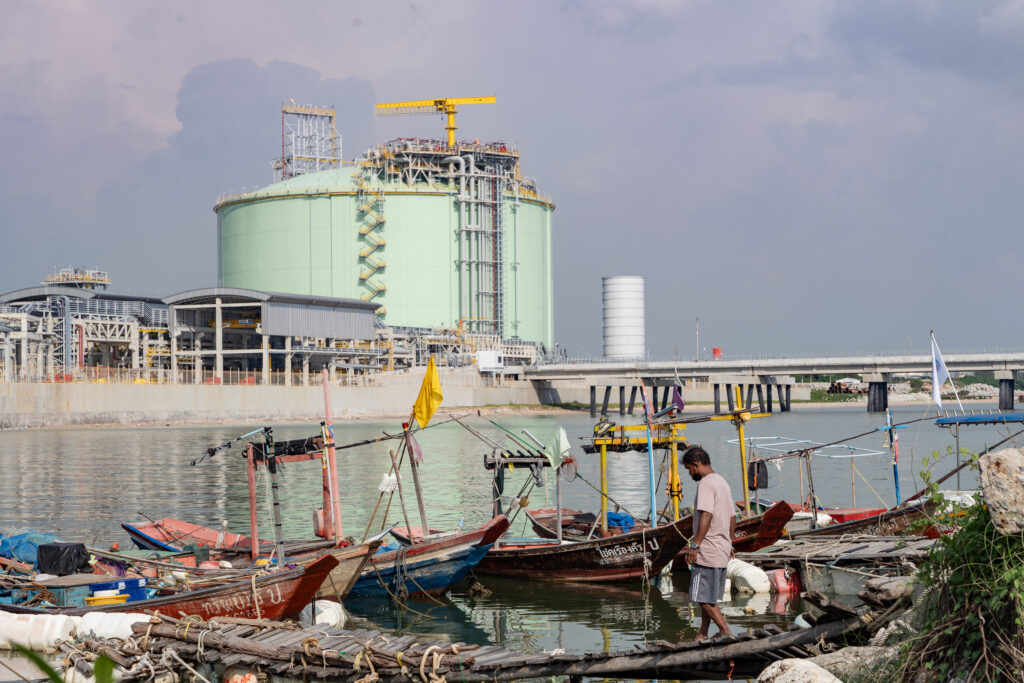
The Shwe natural gas and Myanmar-China oil transport projects are having severe impacts on affected communities living along and near the projects from Rakhine State through Magway and Mandalay Divisions and north-east through northern Shan State to China.
The EarthRights School Burma is housed in a compound just outside Chiang Mai, with a classroom, office and living space for the students.
Director Chana Maung welcomes the ERSB class of 2011.
Students learn about human rights, the environment, rule of law and other subjects that are difficult or impossible to study in their home country.
Ka Hsaw Wa, ERI's co-founder and executive director, speaks to students before they depart for their fieldwork.
Nyein Tun, ERSB training associate, translates some of the more complex concepts into Burmese.
The capstone of the students' time at the school is the research report or project proposal. Each student is assigned an advisor who helps them develop their ideas, write their report or proposal and generally support them throughout the project.
Students often have a game of chine lone after class, a Southeast Asian version of volleyball played without the hands.
Paing Zaw Zaw, a 2012 student, shows off his lunch. Meals are home-cooked every day, with rice, Burmese curries and spicy chili sauces.
Guests, students and staff gather for lunch in the afternoon.
Students speak with a guest presenter after class. Guest presenters are an integral part of ERSB's program, bringing their expertise in a wide range of topics to the students.
2012 students Dahlia, Myint Zu and Sandar dressed up for their graduation.
Graduation marks the end of the students' time at the school. Here, ERI's Campaigns director Paul Donowitz speaks to the class of 2012 about the challenges that lie ahead.
The EarthRights School Mekong is located in a secure location in Chiang Mai, Thailand. The school is set in a lush tropical garden with fruit trees, a volleyball net and plenty of space for the students to live, eat, work and play.
Alumni often visit the school to share their experiences after graduation. Here, a Tibetan alumna from 2011 teaches a class about conflict resolution.
No shoes in the classroom!
Breakfast, lunch and dinner are served every day, courtesy of the Mekong School cooks.
Students, staff, guest teachers and friends share lunch at the school.
Field trips are an integral part of ERSM's curriculum. Here, the students take a boat down the Salween River to visit a small Karen community on the border of Thailand and Burma.
Community members act as guides during school trips, explaining the challenges they face and the strategies they use to resolve them.
A 2011 student holds up a sign during a visit to Thailand's infamous Pak Mun dam, which has been mired in controversy for over a decade.
Students visit the Mae Moh lignite mine in Northern Thailand, which forced several communities to relocate due to toxic chemicals.
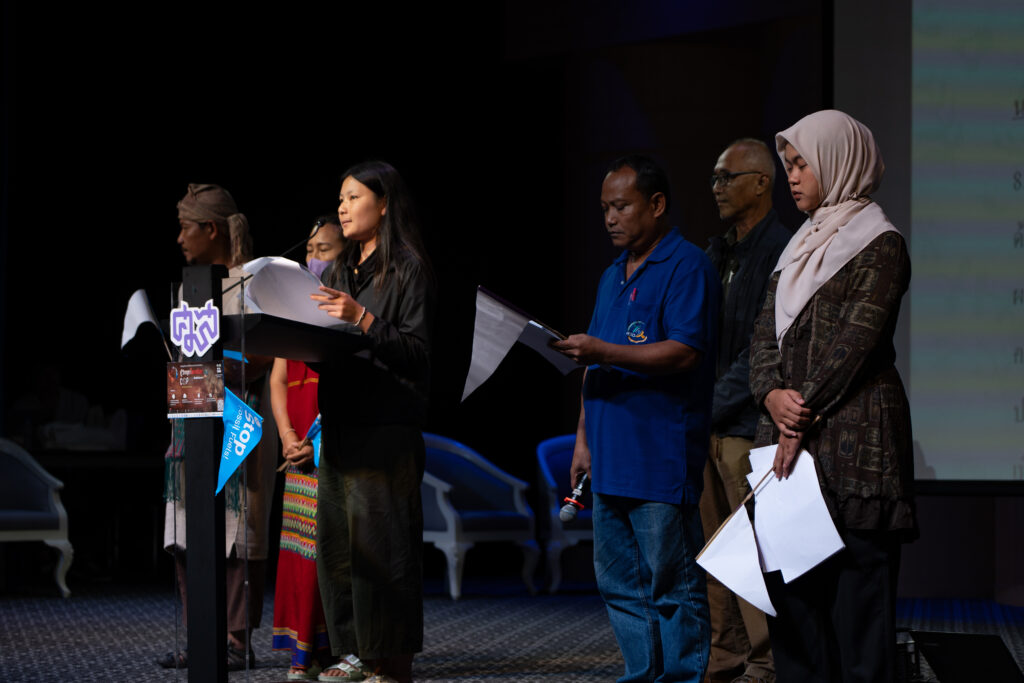
ERSM's graduations are always festive events, attended by friends and alumni from all over the world.
Speeches, performances and dinner mark the end of ERSM's school year.
A student performs a traditional Cambodian dance at the graduation.
HEART sits in a sea of ricefields on the outskirts of Mae Sot, Thailand, with the jagged mountains of Burma visible in the distance.
The HEART grounds are a collection of dorms, a classroom and a kitchen in simple bamboo and concrete buildings. Outside are vegetable gardens, stands of bamboo, a pond and a soccer field.
The school's accommodation is housed in simple bamboo and wooden buildings with straw, leaf and aluminum roofs.
ERI staff Eliza Costello teaches students about field research and data collection methods. Staff, partners and friends of ERI and the Mae Tao Clinic often visit the school to teach classes in their area of expertise.
Group work is an integral part of the training sessions. Here, students discuss reports written by other Burma oranizations.
Many classes are conducted in English. Though the students are all conversational when they arrive at the school, some concepts require a Burmese translation. Here, ERI training coordinator Nyein Tun explains bioaccumulation of mining pollution.
Students grow much of their own food at the school. Along with fruits and vegetables such as mangoes, papaya, okra and cassava, HEART is also home to catfish, ducks and geese.
Breakfast, lunch and dinner are home-cooked by students and staff every day. Here, a staff member serves coconut soup with tofu and mushrooms.
Students outside the classroom.
Dr. Cynthia Maung, founder and head of the Mae Tao Clinic, speaks to the second class of HEART students at their opening ceremony.
The 2011 HEART class poses with their certificates, Dr. Cynthia and ERI's co-founder and executive director Ka Hsaw Wa.
HEART's 2011 graduation fell on the Thai holiday of Loy Krathong, where revelers release sky lanterns made of bamboo and rice paper. Students and friends of HEART lit lanterns after the graduation ceremony to celebrate.
Una versión de nuestro sitio web en español será lanzado a mediados de 2013.