Location: San Francisco
Nigerian villagers have dismissed a U.S. federal case against Chevron after reaching a confidential settlement with the California oil giant. Using a tactic pioneered by Chevron itself in its long-running Ecuador contamination litigation, the villagers used a U.S. statute to seek records on the environmental impacts of gas flaring on their communities and the penalties that Chevron Nigeria Ltd. (CNL) has paid for conducting this illegal and extremely harmful activity.
The villagers, representatives of five villages in Ugborodo Community in the Niger Delta, sought these records in order to assist with their suit against CNL in Nigerian court. In that case, they allege that CNL is liable for health impacts and environmental harms caused by the highly toxic practice of burning natural gas that comes out of the ground during oil extraction in order to cheaply dispose of it. They seek damages and a stop to the flares.
“Gas flaring is a very serious issue,” said George Ogara, counsel for the plaintiffs in Nigeria. “It is basically an open fire on the people. These fires do not help us; they do not make crops grow or improve our health. In fact, it is the opposite. They destroy both our health and our environment.”
“We sought information to support the Ugborodo community’s lawsuit in Nigeria,” said Richard Herz, Litigation Coordinator for EarthRights International (ERI), which represented the Nigerian in the U.S. suit. “Gas flaring is an illegal and highly destructive practice. We hope that the Nigerian court will finally put a stop to it in the Ugborodo community.”
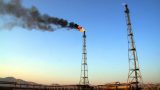
Gas flaring, which is a major contributor to climate change, causes acid rain, destroys crops by contaminating the surrounding air and soil, and exposes villagers to nonstop noise pollution and brightness from the flames, which burn day and night. Health impacts include skin rashes and respiratory infections, as well as increased risk for asthma and cancer.
Gas flaring has been illegal in Nigeria since 1984, but companies have found ways to skirt the law through exemptions, delays in implementation, or by paying minimal penalties. Nigeria flares the second highest volume of gas in the world, second only to Russia.
In the U.S. lawsuit, the Nigerians used a tactic that Chevron itself pioneered, using the federal Foreign Legal Assistance statute, 28 U.S.C. 1782, to seek information. In recent years, Chevron filed dozens of Foreign Legal Assistance requests to obtain documents and testimony to assist in defending environmental contamination litigation in Lago Agrio, Ecuador. That case ultimately resulted in a multi-billion dollar judgment against Chevron in Ecuador, but Chevron used documents it obtained through the U.S. procedure to attack the judgment in a subsequent lawsuit in New York.
ERI believes that this may be the first case in which a public interest group has used a Foreign Legal Assistance request to assist communities obtain information from an American multinational. While the terms of the settlement are confidential, the plaintiffs are pleased with the outcome.
The case is In re Metsagharun, No. 12-mc-80274 JSW (KAW) (N.D. Cal.). In addition to EarthRights International, the applicants are represented by lawyers Judith Brown Chomsky of Philadelphia and Abby Rubinson of San Francisco.
About EarthRights International
EarthRights International (ERI) is a nongovernmental, nonprofit organization that combines the power of law and the power of people in defense of human rights and the environment, which we define as "earth rights." We specialize in fact-finding, legal actions against perpetrators of earth rights abuses, training grassroots and community leaders, and advocacy campaigns, and have offices in Southeast Asia, the United States and Peru. More information on ERI is available at https://www.earthrights.org.
More information on gas flaring.
More information on Foreign Legal Assitance (FLA).