
SUMMARY
When the U.S. Congress passed Section 1504 of the Dodd-Frank Act directing the Securities and Exchange Commission (SEC) to issue regulations requiring oil, gas, and mining companies to disclose the payments they make to governments, it set a deadline for the SEC of April 2011. As part of our extractive revenue transparency work, EarthRights International participated in the SEC’s rulemaking process by submitting a number of comments on the draft regulations. But the SEC delayed finalizing the regulations, and in May 2012, after it had repeatedly failed to meet its deadline, EarthRights filed suit against the SEC on behalf of Oxfam America.
After the suit was filed, the SEC moved right along: a few months later, in August 2012, the SEC voted to adopt a final rule implementing Section 1504. After a legal challenge by the American Petroleum Institute and other industry groups, however, the rule was sent back to the SEC in July 2013. Again, the SEC dragged its feet, and in September 2014, EarthRights and Oxfam sued again to compel the SEC to finish the regulations.
In September 2015, the court sided with Oxfam and ordered the SEC to expedite the extractive industry revenue transparency regulations. The SEC submitted an expedited timeline to the court assuring that the Final Rule will be published by June 2017. Consistent with that promise, the SEC issued a proposed rule in January 2016, and voted on a final rule on June 26, 2017.
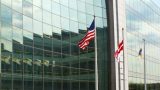
Photo CC Securities Exchange Commission.
TIMELINE
2010
Congress enacted the Dodd-Frank Wall Street Reform Act, including Section 1504, which directed the SEC to issue rules requiring oil, gas and mining companies to publicly disclose the payments they make to the federal government and to foreign governments. The statute required the SEC to finalize the regulations by April 2011.
2011
The SEC published a Notice of Proposed Rulemaking in January 2011 to receive comments from the public on the proposed rule. But the SEC took no further action to finalize the rule, missing the statutory deadline.
2012
In May, over a year after the missed deadline, EarthRights represented Oxfam America in suing the SEC in federal district court in Massachusetts, arguing that the SEC had unlawfully withheld and unreasonably delayed action on finalizing the rule.
In August, shortly after EarthRights moved for summary judgment in the lawsuit, the SEC voted to approve the final rule.
In October, the American Petroleum Institute (API), along with other industry groups, filed suit against the SEC in an attempt to overturn the regulations and strike down Section 1504 itself. EarthRights, on behalf of Oxfam, moved to intervene in the case to defend the rule.
In November, the SEC denied industry’s request to stay implementation of the rule during litigation. Industry claimed that the rule would require companies to violate host country laws that prohibit disclosure of payments. EarthRights strongly opposed the request for a stay, arguing delay was not necessary to prevent injury to the companies and that compliance was not in the public interest. The SEC agreed and rejected API’s claims, finding there was no persuasive evidence that any laws actually existed that would prevent disclosure.
2013
EarthRights filed its brief in January, defending the SEC’s economic analysis, and refuting API’s claims that they would suffer billions of dollars in loses from disclosure of payments, and the argument that companies have a First Amendment right to conceal payments they make to governments. EarthRights also argued that industry had filed suit in the wrong court. Members of the Senate and the House filed amicus curiae briefs supporting the transparency rule and condemning API’s unprecedented attack on disclosures.
In April, the D.C. Circuit agreed with Oxfam that API had filed its lawsuit in the wrong court and sent the case to the district court.
In June, the European Union enacted mandatory disclosure requirements for the extractive industry modeled off Section 1504 and the SEC’s 2012 rule. The EU directives required all 28 EU-member states to transpose the requirements into national law by 2015.
In July, the district court issued an opinion vacating the rule and remanding it to the SEC, concluding that the SEC needed to reconsider certain aspects of the rule. The SEC was not required to change its decisions, but it needed to provide a fuller justification for the decisions it made.
2014
More than a year after the district court’s decision, the SEC had failed to take action on finalizing the rule. In September 2012, EarthRights sued the SEC again for failing to meet its deadline, arguing the SEC had unlawfully withheld the final rule mandated by Congress.
In December, both Canada and the United Kingdom moved forward with disclosure requirements modeled partly off Section 1504. Canada enacted the Extractive Sector Transparency Measures Act, requiring the development of mandatory disclosure regulations. The United Kingdom adopted mandatory disclosure legislation to implement the EU directives, ahead of schedule.
2015
In September, the district court issued an order agreeing with Oxfam that the SEC had failed to meet its legal duty, thus requiring the SEC to abide be a new schedule for rulemaking.
In December, the SEC issued a proposed rule and opened the public comment period.
2016
EarthRights again participated in comments to the SEC in support of a strong rule. In June, the SEC published a final rule implementing Section 1504 that was, once again, remarkably robust, mostly in line with ERI’s comments.
By the end of 2016, more than 80 UK-listed extractive companies had disclosed their payments to governments under the UK regulations, including Shell, BP, SOCO, Tullow, Total (reporting under French law, too), Russian companies Lukoil and Gazprom, and mining giants like Anglo American, BHP Billiton, Rio Tinto, Total (France), and Tullow (UK).
2017
Congress and the Trump Administration began the year with a major push to roll back critical regulations passed during the Obama Administration using the Congressional Review Act. That law allows Congress to use expedited procedures to pass a “resolution of disapproval” that voids a final rule, with limited debate and without being subject to the filibuster.
On February 14, Trump signed the resolution into law, nullifying the rule. Because this was a rule that Congress specifically required the SEC to issue, the SEC still has a legal obligation to promulgate a new rule within one year.
Canadian-listed companies began publicly disclosing payments to governments under Canada’s mandatory disclosure rules.
DOCUMENTS
Oxfam America’s Complaint in First Delay Lawsuit (May 2012)
Oxfam Complaint in Second Undue Delay Lawsuit (September 2014)
SEC Answer (December 2014)
Oxfam Motion for Summary Judgment (January 2015)
District Court Opinion ordering SEC to expedite rulemaking (September 2015)