
The power of law and the power of people in defense of human rights and the environment


Chevron's Footprint in Ecuador, Burma, and Nigeria PDF Print E-mail
Written by EarthRights International   
Tuesday, 22 April 2008


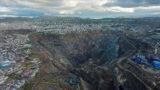
Image courtesy of Oil Change International


Earth Day is an international day intended to inspire awareness of and appreciation for the Earth's environment, but for people toiling in the wake of the U.S. oil giant Chevron, it is just another day of struggle. Consider Chevron’s footprints in Ecuador, Burma, and Nigeria.

In Ecuador, Chevron is refusing to clean up 18 billion gallons of toxic waste in the Amazon rainforest; what has been called “one of the world’s most contaminated industrial sites.” A court-appointed expert in an ongoing lawsuit in Ecuador recently found high levels of cancer and miscarriages, and widespread contamination in the area in dispute, assessing Chevron’s clean-up costs at US$7-16 billion - potentially the largest environmental judgment in history.

Has Chevron accept responsibility for their legacy of destruction?  Unfortunately, the world’s seventh largest company Chevron claims they’ll never pay, calling Ecuador’s judicial process “bogus.”

This month, two Ecuadorian activists, lawyer Pablo Fajardo Mendoza and community organizer Luis Yanza, were awarded what has been called the “Nobel Prize for the Environment” the esteemed Goldman Environmental Prize for their efforts to force Chevron to clean up its mess in their homelands. Instead of accepting responsibility for their destructive practices and the inhuman consequences for the people and environment of Ecuador, Chevron chose to call these courageous men, “environmental con men”.  In slamming the Goldman Environmental Foundation, Chevron claimed that “[n]o one ever cared to hear our side of the story.” What the company really means is that they wish their public relations people were given a chance to roll out another multi-million dollar ad campaign to distract from their actual record.

In Burma, Chevron’s Yadana natural gas project provides billions in revenue to the military junta that shot Buddhist monks, students and other peaceful protesters on the streets of Rangoon last fall.  Unlike the rest of the world who helplessly watched the violence on their TV screens, Chevron, the largest U.S. investor in Burma, could have done something to stop its business partners from escalating the violence and bloodshed.  Instead, they were deadly silent.  Meanwhile, local villagers living  along the  40-mile stretch of pipeline face forced labor,  killings, rape, beatings, and other abuses by military assigned to guard the Yadana project--which Chevron has lauded as a model of corporate responsibility.  .  no need to wonder if these villagers see any benefits from the “development” of their resources.  The  US $2.7 billion in gas sales to Thailand in 2007 alone constitutes roughly 45 percent of all exports for a regime that in the same year allocated a mere 1.5% of its budget to the Ministry of Health, and only about 5% of its budget on public education.

In Nigeria, where Chevron discovered the first offshore oil deposits in 1963, poor and dispossessed communities  have a long list  of complaints against the company, and for good reason: the delta is devastated. Chevron has flared billions of cubic feet of natural gas resulting in acid rain, instead of re-injecting it; they have degraded fresh water sources by widened canals resulting in salination; there have been frequent oil spills, and they have dumped toxic drilling waters into rivers thereby severely depleted fish stocks, which the people of the delta rely on.  In 1998, protestors on an offshore Chevron oil platform pleaded that the company do more to change appalling social and environmental conditions, asking for things like schools, roads, community development, and environmental reparations. In response, Chevron’s management summoned the notorious Nigerian military, flew them in on company helicopters, and two unarmed activists were shot dead, while several others were left wounded. The protestors left alive were detained and at least one claims to have been brutally tortured by Nigerian authorities.

In a public statement, Chevron claims to have “acted prudently and responsibly.”

Ultimately, perhaps, the courts will decide.  . a judge in a case against Chevron in which ERI represents Nigerian plaintiffs harmed by the attacks, recently recognized evidence that Chevron’s personnel “were directly involved in the attacks,” because they transported the Nigerian military, paid them, and knew that they “were prone to use excessive force.” 

It appears too many people have indeed heard, and experienced, Chevron’s side of the story. When will this company learn from its past mistakes and begin to change their corporate practices?  Instead of continuing to pour millions of dollars into their Human Energy advertisement campaign, we call on Chevron to rethink their role as corporate citizens, and use their considerable influence and resources for the betterment of the planet and all its inhabitants.  On Earth Day, the global community demands nothing less.

Next week, ERI will hold a press conference at the Foreign Correspondents' Club of Thailand to release its forthcoming report, The Human Cost of Energy: Chevron's Continuing Role in Financing Oppression and Profiting From Human Rights Abuses in Military-Ruled Burma and hold a special screening of Total Denial in the evening. All individuals are welcome to attend, however evening programs usually have a cover charge for non-members. Please see the FCCT website for more details.

Tuesday, April 29th, 2008
Report Release Press Conference - 10:00 AM
Total Denial Screening - 8:00 PM

The Foreign Correspondents' Club of Thailand
Penthouse, Maneeya Center
518/5 Ploenchit Road
Patumwan, Bangkok 10330

 
RSS | About Us | Privacy Policy | © 2000-2006 EarthRights International | Design by CEDC