
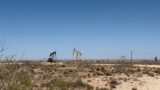
Santa Fe, New Mexico, March 12, 2026 — This week, the Center for Biological Diversity, the San Juan Citizens Alliance, and Tó Nizhóní Ání filed suit against New Mexico and its oil and gas regulator for failing to hold oil and gas companies accountable for cleanup and decommissioning of inactive wells. There are thousands of oil and gas wells across the State that are no longer producing yet are sitting unplugged and unremediated, in violation of New Mexico law. These wells pollute the environment and threaten the health and safety of New Mexicans. EarthRights International is co-counsel with and representing the Center.
“Unplugged wells routinely emit toxic pollutants long after they stop producing oil and gas,” said Rachel Conrad, an attorney with EarthRights. “The longer a well is left inactive and unplugged, the greater the opportunity for harm. These wells pollute the air, water and land, release methane that contributes to climate alteration, and pose unacceptable public safety risks.”
The lawsuit, filed in New Mexico District Court in Santa Fe, alleges that the State has failed to carry out its duties under the New Mexico Oil and Gas Act, which requires the state’s Energy, Minerals and Natural Resources Department’s Oil Conservation Division to ensure that operators promptly and properly plug wells and remediate surrounding areas.
Division data, and documents received through public records requests, show hundreds of operators—more than half of all operators in the State—are currently out of compliance with well plugging and remediation obligations, yet the defendants in the action have taken virtually no meaningful action to hold them accountable. Allowing operators to leave wells unplugged long past the deadline for cleanup increases the likelihood such wells will eventually be abandoned without plugging and cleanup and it will be too late to compel operators to carryout their duties. When wells become “orphans,” those responsibilities (and the financial liabilities) fall to the State, and ultimately to taxpayers. It can be years, or even decades, before the State gets around to plugging such wells and even longer for restoration and remediation, prolonging the time that such wells cause harm to people and the environment.
“It is common knowledge that oil and gas companies will evade these duties as long as possible if they can get away with it, using funds that should be earmarked for cleanup for other purposes, and seeking to offload depleted wells to smaller and smaller operators that eventually go bankrupt, often by design,” said Michelle Harrison, Deputy U.S. Legal Director of EarthRights International. “The longer the State waits to actually enforce the law, the higher the risk of insolvency, and the higher the risk the well becomes the responsibility of the State and taxpayers.”
The New Mexico Oil and Gas Act also requires the State to secure financial assurance, typically in the form of a surety bond, from oil and gas companies, before they begin to operate a well, and additional financial assurance when wells have been inactive for two years. These funds are meant to ensure money is set aside for well plugging and remediation that the State can, and under New Mexico law must, collect to cover costs when operators walk away without fulfilling their duties. But the lawsuit alleges that the State frequently fails to secure these funds for wells that are at the highest risk of being orphaned.
Even when the State does secure financial assurance upfront, it virtually never collects those funds. Records received from public information requests last year showed it had only collected the financial assurance of a single operator over nearly a decade, despite plugging hundreds of wells over the same period with public funds. Those records further revealed that the Division had taken no action to seek indemnification or otherwise recover costs for plugging noncompliant operators’ wells, contrary to the clear intent of the Oil and Gas Act.
The State has already spent tens of millions of dollars in state funds—and tens of millions more in federal taxpayer funds—to plug wells for operators who are unable or unwilling to do so. A recent report by the New Mexico Legislative Finance Committee estimates that the current backlog of nearly 1,000 wells and even more well sites for which the State has already assumed responsibility will cost hundreds of millions of dollars more and would take more than a decade to address. Near-future liabilities are projected to exceed $1.5 billion even without accounting for the tens of thousands more low-producing wells that will soon come due for cleanup.
“These are costs that should be borne by the operators who profit off of the State’s resources,” said Harrison. “This case is ultimately about fairness. The State cannot continue to allow operators to break their promises without consequence, leaving New Mexicans to pay to clean up their mess.”
The lawsuit seeks a declaration that defendants are violating their duties under the Oil and Gas Act, and injunctive relief to require them to enforce the law and hold operators accountable for cleanup.
Media contact:
Daniela Colaiacovo, EarthRights International
daniela.colaiacovo@earthrights.org
(703) 975-0608