On July 25th, the Inter-American Court of Human Rights issued a long awaited sentence in the case of Sarayaku v. Ecuador, affirming the rule that indigenous communities throughout the Americas must be consulted before their governments approve investment projects that affect their use and enjoyment of their traditional lands.
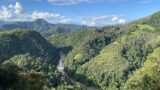
A bit about the case: in 1996, Ecuador’s state oil firm Petroecuador signed a prospecting deal led by Argentina’s Compañía General de Compustibles (CGC) in partnership with U.S.-based ConocoPhillips/Burlington Resources. Much of this land covered the ancestral land of the Kichwa community of Sarayaku, located deep in the southeast Ecuadorian Amazon. Although protests and domestic legal actions stalled oil exploitation until 2010, the oil consortium had already done much damage during the “exploration” phase. By 2003, CGC had drilled 467 boreholes around the town packed with 1,433 kg of high-impact explosives, felled trees, destroyed a sacred site, and ruined several water sources. In 2003 the Sarayaku community took the case to the Inter-American Commission on Human Rights, who then presented the case to the Court in 2006 after Ecuador ignored the Commission’s 2004 precautionary measures requiring the operations to be suspended.
In its decision, the Inter-American Court concluded that Ecuador breached Sarayaku’s right to prior consultation, communal property, and cultural identity when it approved the prospecting project, and CGC’s activities had threatened their right to life and personal integrity. The Court also ruled that Ecuador violated Sarayaku’s right to judicial protection because the domestic judicial resources used by the Sarayaku in Ecuador were ineffective at remedying these human rights violations. The Court ordered Ecuador to pay damages for material and nonmaterial harm, clear the explosives, make a public act recognizing their international responsibility for the harms caused, and completely overhaul the state’s consultation processes. Adding to the requirements of free, previous, and informed consent already established in the 2007 case of Saramaka v. Suriname, the Inter-American Court stated that consultation must be carried out in good faith in order to achieve agreement or consent between parties, and consultation of indigenous communities must be conducted in the first planning stages of development projects that will affect their territory.
Not only was this a grand achievement for the Sarayaku community, but it will have resounding impacts on the rights of indigenous communities in Ecuador and throughout Latin America, as shown by the unprecedented visit by several judges from the Inter-American Court on Human Rights to the Sarayaku community. The impacts of the decision can be seen already in Ecuador, where the government has already promised to pay damages and has stalled a new round of oil licensing. The case gives hope that someday governments will be required to secure indigenous communities’ consent before granting investment and development projects on their traditional territory.
The international community owes this immense success for indigenous rights and environmental justice to the members of the Sarayaku community, who bravely decided to stand up for their rights, persevering for 10 years in this legal battle that took them all the way from their community, 2 days by boat from the nearest town, to the International Commission on Human Rights in Washington, DC, and the Inter-American Court on Human Rights in San Jose, Costa Rica.
The elected president of the Sarayaku lauded the Inter-American Court’s conclusion last Wednesday and congratulated his community on their victory, “gained through the efforts of its people and the support of allied people and organizations committed to the rights of indigenous peoples.” The community’s lawyer Mario Melo reiterated that the victory comes as “the fruit of a large effort on the part of the community’s people, who were key players in every step of the process. For that alone this deserves to be recognized as a milestone in the ongoing struggle of indigenous peoples to reclaim their rights.”
This guest post was contributed by Amanda Monaco, a 2nd year law student at Georgetown Law and a legal intern in ERI's Amazon office in Peru.
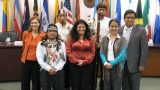
Photo courtesy of AmazonWatch.