In this series, we highlight real-world stories of how participants of our Local Engagement, Action, and Dialogue (LEAD) training programs use community-based research tools to support communities in defending their human rights and managing their natural resources.
Bounmy*, a young legal trainer from Laos, has worked directly with communities for over two years to equip them with the capacity to protect their natural resources from external threats. A key tool that he has used in several different communities is the River of Life Mapping Tool, which helps communities to visualize experiences, challenges, and identify potential harmful impacts on natural resources.
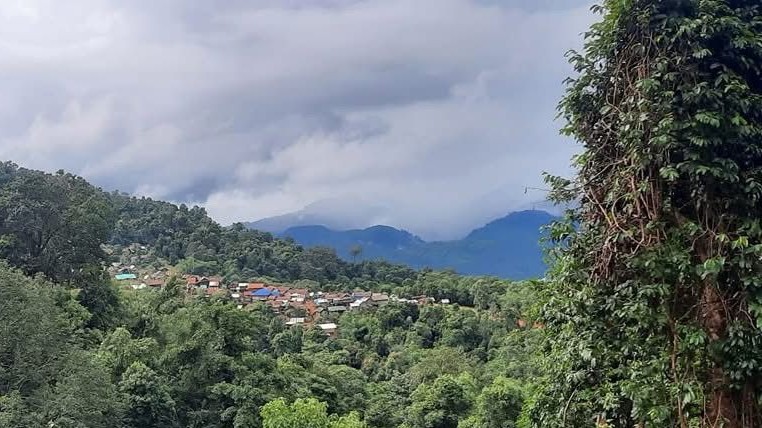
Photo by Bounmy
Residents from six different villages in the Luangnamtha and Luangprabang provinces, Laos, explained to Bounmy that their rivers were once abundant with fish and water, but are now running dry due to deforestation by local farmers and the impacts of climate change. This has impacted the availability of natural resources throughout the community.
This is the story of how Bounmy uses these tools to support communities across Laos in protecting their rights and resources.
Using the River of Life Mapping Tool
Bounmy worked with residents from the six different villages to use the River of Life Mapping Tool to visualize the impacts of water scarcity on the river and the community. Through the mapping process, the community was able to trace changes over time and understand the connection between forest loss, climate change, and water scarcity.
The tool is a visual, participatory method where individuals or groups draw a river to represent the course of their experiences, highlighting key events, challenges, and turning points along the way. Its curves, rapids, branches, and calm waters symbolize different life stages or processes, helping participants reflect, share stories, and identify patterns.
Initially, the community members weren’t aware of the environmental benefits of forests. After the mapping exercise, community members who were previously hesitant later agreed that their land could be used for forest restoration. “I think they understand, and they think about the future. They think about the environment and the community,” said Bounmy.
The strength of the River of Life Mapping Tool lies in the fact that it is accessible for everyone.
“I use the River of Life Mapping Tool because people in the community cannot speak Lao, they cannot understand Lao language documents,” Bounmy explains. “So I just focus on their thinking, their mindset, their ideas, and their problems in the community. Everyone can draw the problem with this tool.”
This approach has proven successful in communities where literacy barriers would otherwise prevent meaningful participation in research and documentation.
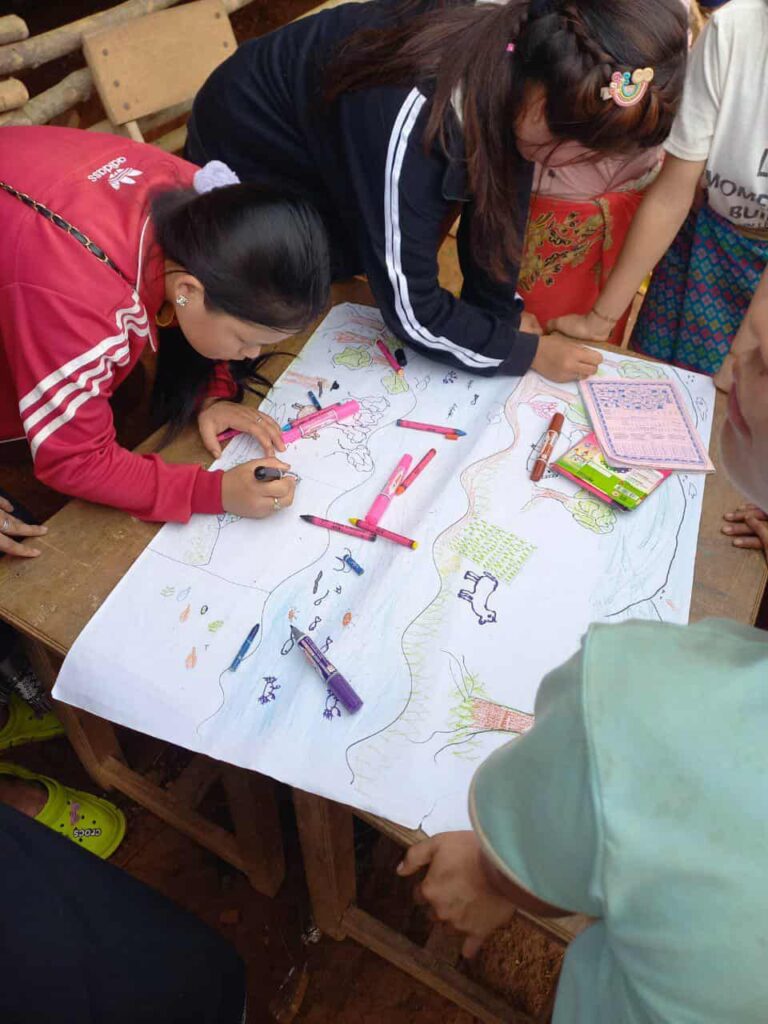
Photo by Bounmy
Facing Power Imbalances
Bounmy shared that a challenge he faces when working with communities to implement LEAD tools is addressing the existing power imbalances and structures. In many villages, men dominated discussions while women remained silent.
“Women have no choice but to follow. The man can say, ‘We can do this, you can do that. Women, you have no idea, you don’t know anything’,” Bounmy explained.
As a result of these attitudes, women were often silenced or ignored in community discussion sessions, leaving little space for true participatory research. As a solution, Bounmy and his team facilitated four separate sessions with men, women, youth, and people with disabilities. This separation created a safe space for participants, where they felt more comfortable sharing their experiences and knowledge.
After these separate sessions, community members would come back together to share what they had learned. This approach revealed different perspectives: women used forest resources primarily for food, while men were more likely to cut trees for commercial purposes.
Beyond the Map: Building Understanding
While the River of Life Mapping Tool serves as a foundation for his engagement with communities, Bounmy also employs other strategies to complement his LEAD research. Recognizing that communities often cannot read or understand formal documents written in Lao, Bounmy translated complex legal information into pictures and videos in local languages.
Bounmy understood that it is essential to build trust with a community and create an environment where members feel comfortable sharing information. To do this, Bounmy uses games and group activities to break down barriers between the facilitators and community members. “The first time we come, they just don’t smile, they’re very serious. But after we play the game, they smile, and they can participate in our activity.”
Furthermore, Bounmy works together with law students who come from the communities. This provides them with an existing relationship upon which they can build trust. The law students also volunteer to translate complex legal concepts and documents into more digestible and understandable ideas for community members.
The Harsh Realities and Increasing Risk
The monitoring of community sessions by local government officials highlights the increasing risk and reality communities face in Laos. In a community that is confronting a Chinese company, residents broke down and cried as they told Bounmy what happened. The Chinese company had paid substantial amounts of money to the local authorities to compensate the residents impacted by the project. However, the residents only received a fraction of the money, with local authorities retaining the majority.
“We know what the problem is, but at that time, we cannot help the people in the community. It was very challenging for the community,” Bounmy explained.
If Bounmy’s organization were to take on this corruption, it could directly could shut down its entire operation. In this situation, Bounmy gave the community legal tools to advocate for their rights and to document their complaints. Through these efforts, the community gained knowledge on how to defend its resources.
In a different community that wanted to restore its forest area, government officials claimed the land was a “military zone” and therefore couldn’t be designated as a village forest area. However, Bounmy suspects that the real reason why the government did not permit the reforestation of the land was due to mining exploration by Chinese companies in the area. After advocacy efforts and emphasizing that the community desperately needed the forest for water, district officials eventually agreed to support the restoration.
The government also restricts what legal information can be shared with communities, presenting a challenge for Bounmy and his work. There are articles and laws that Bounmy knows would help communities protect their rights better, but they’re prohibited from distributing them. The fear is explicit: if communities know their full legal rights and use this knowledge to challenge the government, they could face persecution and criminalization.
Comprehension and Trust Building With Communities
When asked what advice on how to conduct truly participative research with communities Bounmy would give others, he was clear.
“Everything you write in the research should be from them. Their ideas, their problems. You shouldn’t think in your mind and write. You shouldn’t ask someone who didn’t live in that community,” shared Bounmy. He believes that it is key to avoid interviewing a few people and then filling in the gaps with your own assumptions.
Furthermore, he emphasized the importance of using simple and visual tools rather than complex documents. “If we don’t use easy tools, if we write on paper, we create documents and give them to people to write the information, they don’t understand.”
Comprehension and trust-building are key. After these have been established, more inclusive discussions can be held with a community. “The first step is that you should make them understand, and after that, they can tell you. They won’t share all that they know if they don’t understand what you are doing or who you are,” he explains. Building that understanding takes time and patience – LEAD facilitators should be prepared to spend days on making sure the community feels comfortable around them.
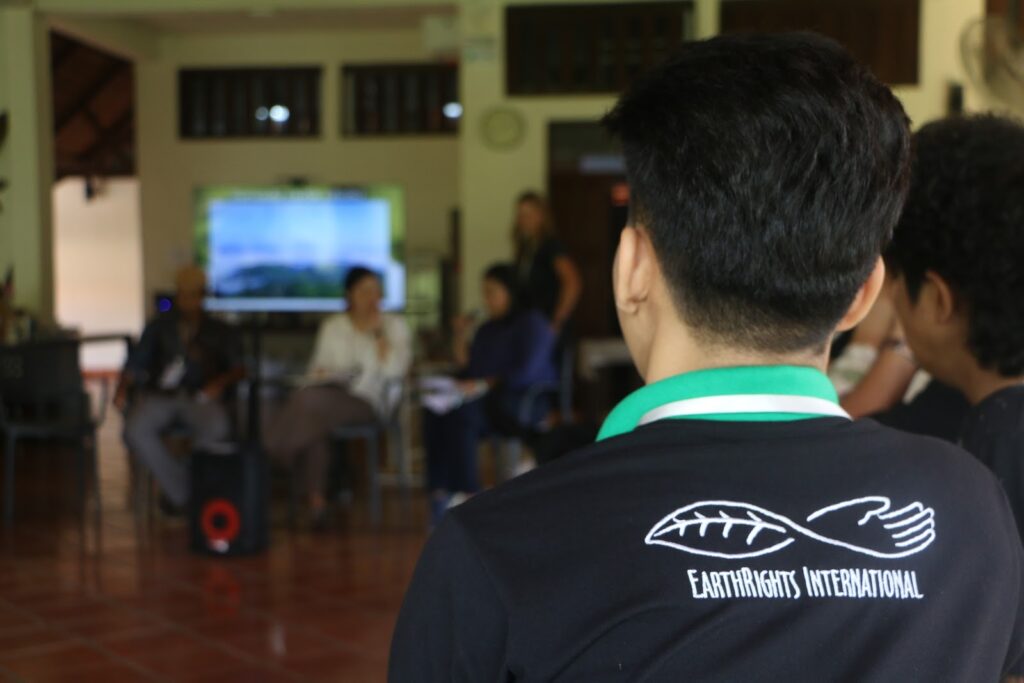
Photo by EarthRights International
A Safe Space for Community Advocates
The issue of government surveillance directly constrains how Bounmy and communities across Laos can organize and advocate. Such surveillance is frequently used to intimidate and pressure those who speak up for their rights and the environment, creating an atmosphere where civil society organizations cannot openly discuss the challenges they face without risking their ability to operate in the country.
“When NGOs, INGOs, or CSOs meet about anything in Laos, we are unable to share and talk about the real issues, talking about these issues may affect the future of your organization’s presence in the country,” said Bounmy.
This is why EarthRights International has become what Bounmy describes as one of “the only safe areas to share and to learn” for Lao community advocates. What makes EarthRights’ spaces secure is not just their physical location outside Laos, but rather about the atmosphere and opportunities it creates. In these EarthRights-supported spaces, Laos community advocates can discuss sensitive issues, build connections, and think strategically in ways that would not be possible inside Laos.
Programs like the LEAD Training of Trainers, the Mekong Legal Advocacy Institute, and the EarthRights School are designed for frontline defenders, community advocates, and emerging leaders from across the Mekong region. They provide opportunities not only for skill-building but also for accessing this kind of secure, open environment that is otherwise difficult to find.
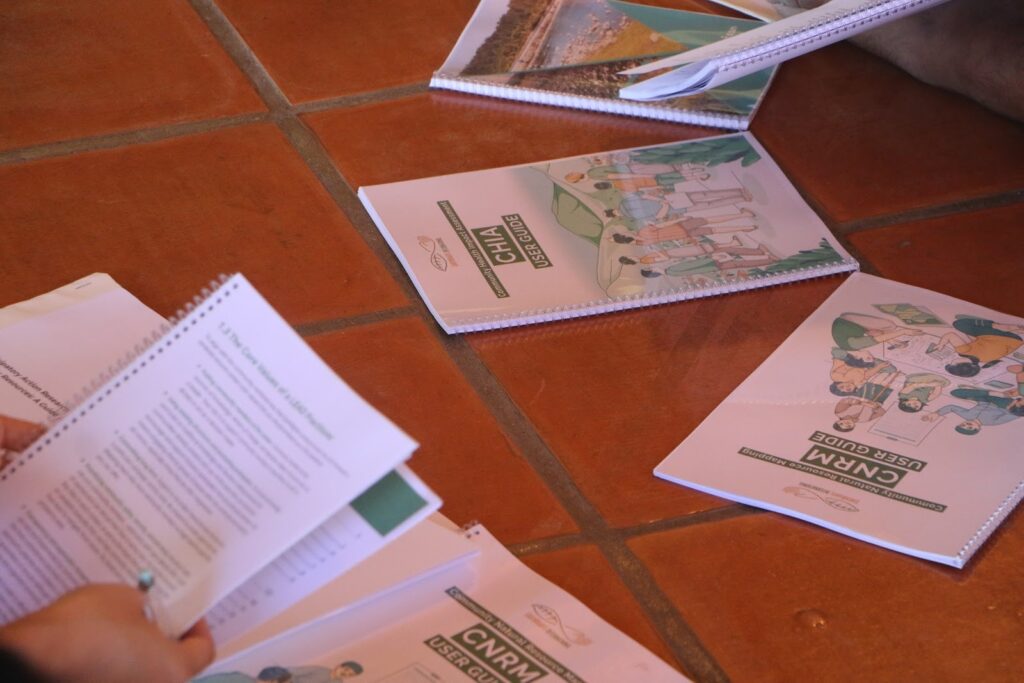
Photo by Sam Hofman/EarthRights International
Despite facing government restrictions and surveillance, Bounmy continues to work with communities, helping them document their environmental challenges and understand their rights. His commitment demonstrates both the power and the necessity of the use of LEAD tools and community-based research in contexts where communities have few avenues available to them for protecting their resources and asserting their rights.
*A pseudonym has been used to protect the identity of the program participant.