On March 14, communities around the world mark the International Day of Action for Rivers, a day to celebrate rivers and defend them from destructive development. Along the Thailand-Myanmar border, communities living along the Salween River have marked this day for more than two decades, standing together to protect one of the last major free-flowing rivers in Southeast Asia.
Among those continuing this work are EarthRights School alumni who have returned to their communities in the Salween basin to defend environmental and community rights.
Their stories reflect both continuity and change in the struggle to protect the river.
Returning Home to Defend Community Rights
After graduating from the EarthRights School, many alumni bring the knowledge and tools they learned back to their communities. For them, defending the river is not only environmental work, it is about protecting people’s rights, cultures, and ways of life.
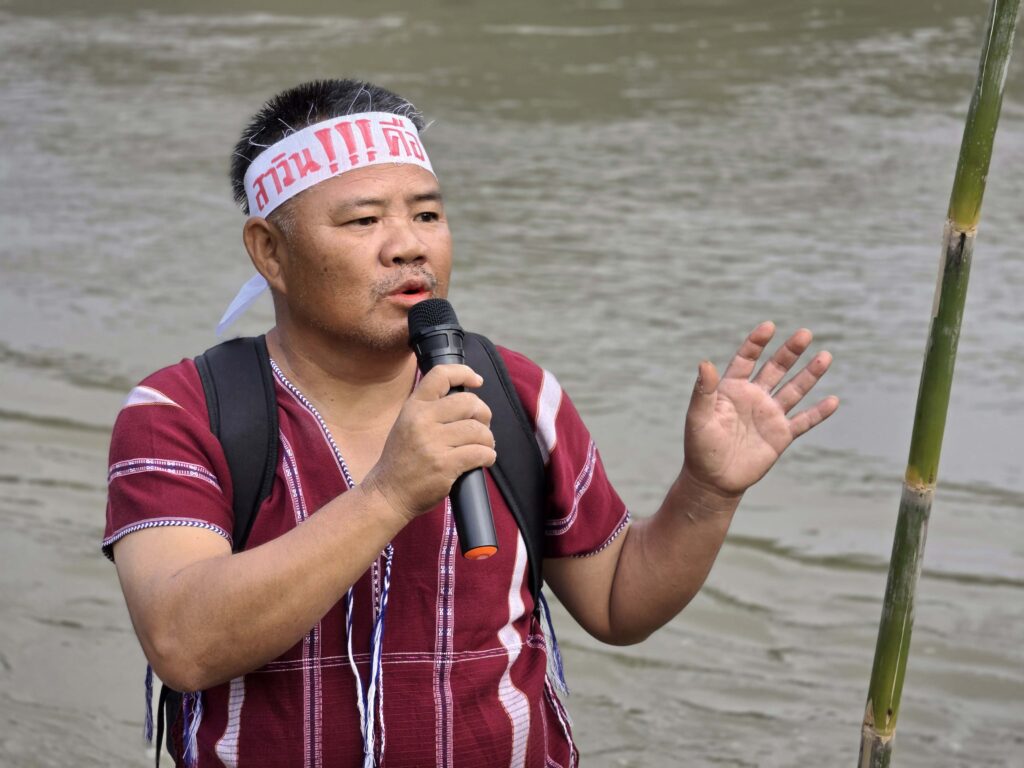
For Satan Chiwawichipong, 2015 EarthRights School alumni, coordinator of the Salween- Ngao-Yuam-Moei River Basin Network, the struggle began long before the term “environmental defender” was widely known in Thailand.
Growing up in the region, he witnessed how development projects threatened local communities and the river they depend on. Back in his 20s, he worked at a factory in Chonburi province to support himself and his family, but eventually returned home when plans to build dams on the Salween emerged.
“For those of us living along the river, we had no choice but to stand up,” he says.
For more than three decades, the network has worked with communities across the Salween basin to protect forests, promote community forest management, and oppose large scale dam projects. Their efforts have helped halt or delay several proposed dams along the Thai-Myanmar border, such as Dagwin, Weigyi, and Hat Gyi dams.
In 2015, Satan attended a seven-month-training program at EarthRights School, where he met other environmental and community rights defenders from different countries in the Mekong region. Learning about human rights mechanisms and international advocacy allowed him and other community leaders to bring local struggles onto global platforms, including raising concerns with the United Nations about transborder impacts on the Salween River.
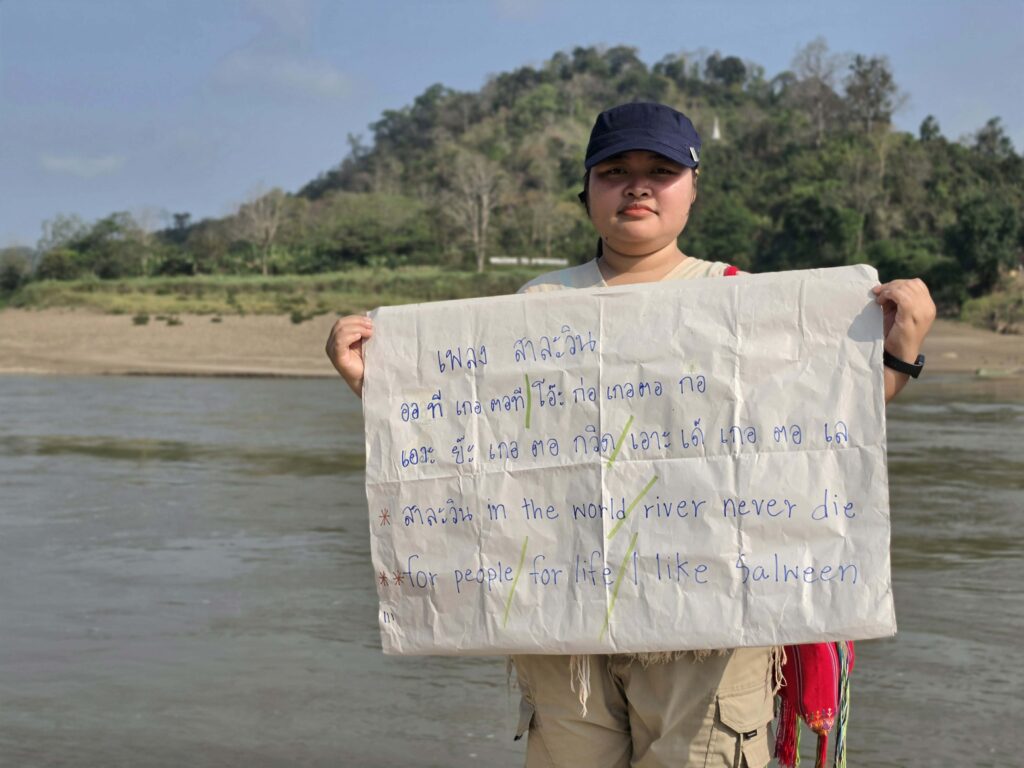
All images courtesy of Jamon Sonpednarin, EarthRights School Alumnus 2018
A New Generation Carrying the Movement Forward
For Som – Larmnuetor Dangdaenwiman, 2018 EarthRights School alumna and a young female environmental defender, the movement to protect the Salween is deeply personal.
She remembers joining anti-dam demonstrations as a child, walking alongside elders holding signs that read “No Dam.” Those early experiences shaped her understanding that the fight for the river is also a fight for justice.
“The Salween is not just a resource,” she says. “It is the lifeblood of our communities.”
Today she works with the Karen Network for Human Rights supporting communities facing land, forest, and environmental conflicts. Her work includes documenting community land use, building GIS maps, and helping communities use legal tools to defend their land and Indigenous rights.
The lessons she learned at the EarthRights School helped her see the connection between environmental protection and human rights and the power of storytelling and community knowledge in advocacy.
“Taking action to protect the community can take shape through different activities, not only protests,” she explains. “It is about the long process of learning together, building knowledge, and strengthening the power of communities from within.”
From Dams to Pollution: Changing Threats to the Salween
For years, the main concern facing communities along the Salween was the construction of large hydropower dams. More than a dozen dams have been proposed along the river from China down to the Thailand–Myanmar border.
Thanks to years of advocacy, many of these projects have been delayed or stalled. But today, a new threat is emerging.
Communities are increasingly worried about heavy metal contamination from rare earth mining and other extractive industries in Myanmar, particularly in upstream areas. The pollution flows downstream, affecting water quality and posing risks to people who rely on the river for drinking water, fishing, and farming.
For long-time defenders like Satan, this shift is deeply concerning. “After fighting for so many years to keep the river flowing freely,” he says, “we now face a new danger of pollution that could destroy the river in another way.”
The issue highlights the complex and evolving nature of transboundary environmental impacts in the Salween basin.
Two Decades of the International Day of Action for Rivers
Despite these challenges, communities along the Salween continue to gather every year on March 14 to mark the International Day of Action for Rivers.
For more than 20 years, these gatherings have brought together villagers, youth, and activists from across the basin to celebrate the river and reaffirm a shared commitment:
The Salween must remain free-flowing.
The events often combine advocacy with cultural traditions. Communities hold ceremonies to honor the spirit of the river, share stories of past struggles, and inspire younger generations to continue protecting their homeland.
For Som, these gatherings carry deep meaning. “It is a reminder that the Salween still has guardians,” she says.
A River That Belongs to All Life
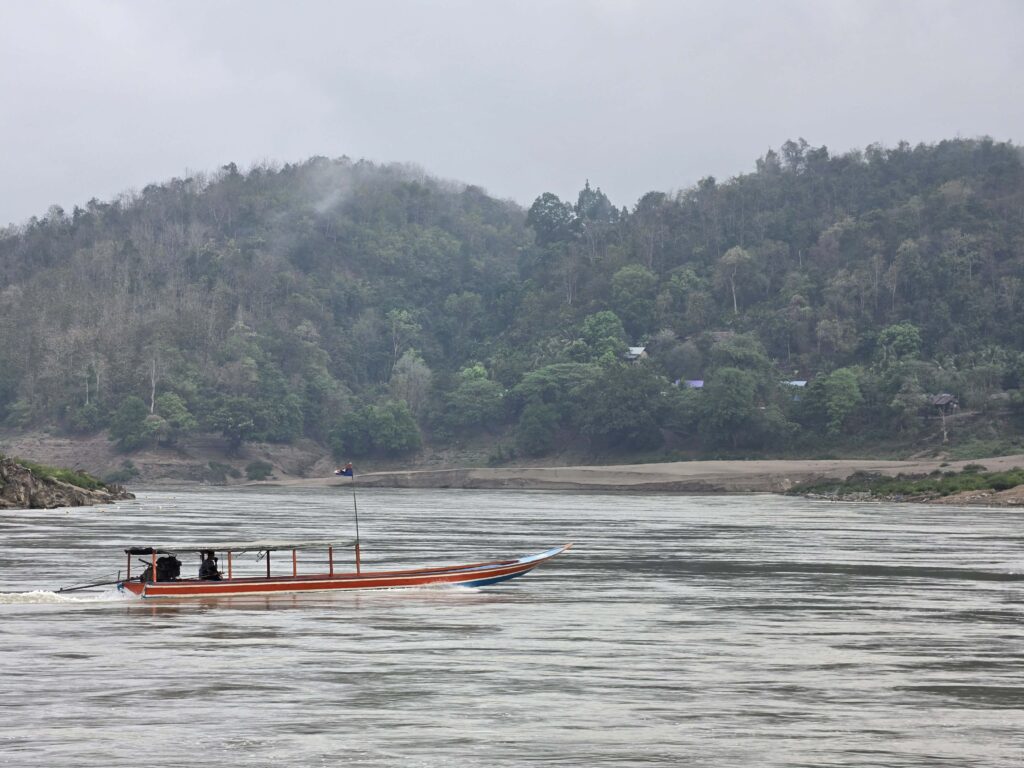
For the communities who live along the river banks, the Salween is far more than water. It is a source of food, culture, memory, and identity. It is where children learn to swim, where elders tell stories from the past, and where communities sustain their livelihoods.
As Satan reflects, the river does not belong to any single country or group. “The Salween is a river of the world,” he says. “Those of us who live here are only its frontline caretakers.”
As EarthRights alumni continue their work alongside communities in the basin, their stories remind us that protecting rivers is not only about resisting harmful projects. It is about defending the rights, knowledge, and futures of the people who depend on them.
And as long as the Salween continues to flow, so too does the hope of the communities who protect it.