Blogs

(Guest Post) Are Indigenous Populations "Seeing REDD" Over Greenhouse Gas Reductions?

This guest post comes from Leina Ley, a third year law student at Berkeley Law and a 2010 legal intern in ERI's Washington DC office. Leina is Native Hawaiian and is interested in indigenous rights, civil rights, and environmental justice.


As the latest round of climate talks resume this week in Cancun, issues of equity and distributional justice continue to plague many of the proposals for reducing greenhouse gas emissions. One proposed mechanism which has garnered significant attention over the past year is REDD (Reducing Emissions from Deforestation and Forest Degradation). At its most basic level the idea of REDD, first proposed by a group of developing countries, is for richer countries to pay poor countries to help them preserve their forests. Yet despite some attention to the regulatory pitfalls of REDD there has been little critical attention paid to the potential impact of REDD on indigenous populations - already among the populations most vulnerable to climate change.

The political appeal of the original REDD proposal is clear. An estimated 15-20% of greenhouse gas emissions can be traced to deforestation not including the concurrent loss of the forest as a "carbon sink" for future emissions. Developing countries are in dire need of assistance in adapting to the impacts of climate change. Forests are environmentally valuable not only in the climate change context but also as hot spots of biodiversity.

Yet while the basic REDD proposal presents a viable solution to deforestation, the law of unintended consequences often seems to govern, most prominently when local communities are not included in the design and implementation of projects related to their lands. A recent historical example is the disastrous impact that the establishment of protected areas had on many indigenous communities.

Will Vietnam Pull Out of Mekong Dam Projects?

Earlier this month I blogged about the Strategic Environmental Assessment report, which recommended a 10 year moratorium on dam construction on the mainstream of the Mekong River. At the time, I noted that this recommendation contradicted positions stated by the governments of Laos and Cambodia, the two countries likely to see the greatest direct financial benefits from proposed dams.

Now, according to the Thanh Nien Daily, Vietnamese lawmakers are beginning to voice their opposition to the dams and support for the moratorium, calling on their government to host a public hearing on the dams and, they hope, drop support for the dams altogether. The article also provides some succinct background on the political and economic context surrounding these projects. ERI's Mekong Legal Advocacy Institute has already been exploring options for legal advocacy surrounding these projects, but it is also important to take this political context into account when exploring cross-border legal strategies.

EarthRights School Mekong Students Return From Their Field Research

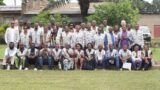
The EarthRights School Mekong students recently returned from two months of field research. The students’ fieldwork provided an opportunity to test the skills they learned during their first four months of the school's intensive seven-month training program.

The EarthRights School Mekong brings together individuals from each of the six countries in the Mekong region: Burma, Cambodia, China, Laos, Thailand and Vietnam. This year's class includes thirteen students from a variety of backgrounds, with students specializing in human rights law, public health, engineering, children's rights, disaster relief, and environmental science. The students joined the school in June 2010.

The following excerpts are from the students' reflections on their first impressions of the school after completing orientation:

In my opinion this here is not only school to come for study to get knowledge and leave. It’s a big home, there are many cousins living together. Although someone may leave here, they’re always still connected.– Lao student

It is very important for us to meet each other to gain experiences, share issues and bring our voice to our governments and agencies that support projects around the Mekong region and impact marginalized communities.-Cambodian student

In conclusion, I strongly believe that, we, the Mekong school students in 2010, will support and cooperate in a big family to study hard, share together, and build a good relationship to protect our Mekong River.- Vietnamese student

Throughout the summer and fall, the Mekong School students received training on team building, gender awareness, conflict resolution, cross-cultural communication, research and data collection tools, interviewing skills and research ethics. They also participated in courses covering topics related to human rights and environmental protection in the Mekong region, including the impacts of large hydropower dams, the rights guaranteed to dam-affected communities, the Asian Development Bank's complaint mechanism and decision-making process, the negative impacts of mining and mechanisms to address them.

Special Representative John Ruggie Releases Draft General Principles on Business and Human Rights

Professor John Ruggie, the UN’s Special Representative of the Secretary-General on the issue of human rights and transnational corporations and other business enterprises, released draft Guiding Principles (GPs) on the responsibilities of States and businesses with respect to human rights this week. Since the inauguration of his mandate, Prof. Ruggie’s “Protect, Respect, and Remedy” framework has set the tone for international discussions about the human rights obligations of businesses, and I’ve been very interested to see his final proposals for “operationalizing” his framework.

I’ll be providing more extensive commentary on the GPs (both to Prof. Ruggie himself and in this blog) in the coming weeks. In general, ERI supports strong recommendations on both preventative measures and access to binding judicial remedies for business-related human rights abuses. We are also interested in what comes next – what structures or processes will arise to carry on the Ruggie mandate and ensure the application of his principles to business conduct worldwide.

As you can see from the copious materials his team has produced, the GPs are the product of almost six years of intensive and extensive study, discussion, and consultation with business, civil society, academia, and state actors worldwide. While we at ERI may wish that Prof. Ruggie’s conclusions went farther than they do, we recognize the tremendous amount of work that has gone into this process and congratulate the Special Representative and his staff on creating a principled, uniform framework within which to think about business and human rights.

Harvard Law School Appoints Tyler Giannini As New Clinical Law Professor

When I sat down  in Torts on my first day of law school, I had no way of knowing that I was sitting next to a future Harvard Law School Professor.  I mean, he looked smart enough, and he definitely took better notes than I did, but I wouldn’t have guessed that he was headed there at that time.  But now, 18 years after we both made it through Torts (and so much more!) I was not all all surprised when Tyler Giannini told me that he had been appointed as a clinical law professor at one of our nation’s most prestigious institutions.

Harvard is lucky to have one of ERI’s founders and former co-directors, who together with Ka Hsaw Wa and myself, was idealistic enough to think that the most marginalized and oppressed people in the world should enjoy basic human rights, and that even the most powerful governments and corporations should be subject to the rule of law.  Tyler gave everything of himself to EarthRights for a decade,  from the courtroom against Unocal to the classrooms of our EarthRights Schools.  The organization wouldn’t be the success it is today without Tyler’s vision and audacity—two of the many qualitites that Tyler will bring to the students and faculty of Harvard Law School. 

Tyler joined HLS as a clinical advocacy fellow in 2004, was appointed as a lecturer on law in 2006, and became director of the International Human Rights Clinic in 2007.  Tyler and ERI have continued to collaborate on a variety of projects, including a recent amicus brief to the U.S. Supreme Court.  We’ve benefited from the excellent law students and graduates that Tyler has continued to send our way; communities around the world have benefited from Tyler’s tireless commitment to their rights.  Needless to say, we at ERI are thrilled for Tyler, and proud that he originally made his name here at EarthRights.   We’re looking forward to continued collaboration with Tyler and HLS, and of course to future progress and victories that we’ll celebrate together.

What's At Stake in Oklahoma's "Sharia Law" Ban?

Last week, Rick blogged about the recent passage of an amendment to Oklahoma's state constitution which "would prevent Oklahoma courts from considering 'the legal precepts of . . . international law or Sharia Law.'" In brief, Rick dismissed the amendment as unconstitutional and impractical, and I agree.

However, one commentor wrote that "Sharia is unconstitutional" and gave examples of "beheading apostates and homosexuals and stoning adulterers to death," examples which would be of grave concern were they actually plausible. Obviously, as a human rights organization, EarthRights International is opposed to beheadings and stonings, and I thought I should clarify what is and isn't at stake here, as there are a great many misconceptions about what the Oklahoma provision actually does, what Sharia is, and how Sharia might be used, without controversy, by courts in the United States.

First, as Rick noted, the Oklahoma provision applies to all foreign and international law.  This paints with a much broader brush than simply targeting Sharia law, and excluding international law (which is often binding on states) is clearly problematic.

Second is the question of what Sharia is.  Incredibly, the Oklahoma provision does not define it; although the ballot question states that Sharia is "Islamic law," based on "the Koran and the teaching of Mohammed"--which is vague enough already--the actual constitutional amendment does not define it at all.  While Sharia is generally accepted to be derived from the teachings of Mohammed, scholars do not agree on its content, and Sharia as applied by different Islamic states is not uniform. 

Should Kiobel judges be able to prevent their colleagues from seeing critical amicus briefs?

Last Friday we filed a rather unusual motion in the Second Circuit Court of Appeals, the federal court that decided the Kiobel case two months ago.  (Kiobel was the decision that held that corporations cannot be sued for human rights abuses under the Alien Tort Statute.)  Seven groups of legal scholars and NGOs filed amicus briefs arguing that the case should be re-heard, supporting the plaintiffs' petition for rehearing.  Unfortunately, all of these amicus briefs were rejected--by the same judges who decided Kiobel.  So we filed a motion asking the full Court of Appeals to reconsider whether the briefs can be filed.

What's going on here?  It may only be of interest to lawyers, but it's important to the way our courts function.  Federal appeals courts hear cases in panels of three judges; Kiobel was decided by two judges, with the third judge disagreeing.  A panel decision can be reconsidered by the court sitting "en banc," which means roughly "as a whole"--all of the active judges of the court get together to hear the case again.  In the Second Circuit, that's ten judges right now.  (There are three vacancies, which President Obama has nominated candidates for; "senior" judges, a semi-retired status that still allows them to hear cases, generally are not included in the "en banc" court.)  When a party files a petition for rehearing, it gets circulated to all of the judges, who can then vote to decide to whether the case will be re-heard "en banc."

The problem here is that only the original three judges decide whether to accept the amicus briefs, and they can prevent the other judges from seeing them--the amicus briefs only get circulated to all of the judges if the judges who wrote the opinion decide to accept them.  So the judges whose opinion is being challenged can decide whether their colleagues see amicus briefs that challenge their decision.  I don't think that's an appropriate gatekeeping function for judges who obviously have an interest in limiting access to this material.

Human Rights Organizations Sue Anvil Mining Over Congolese Massacre in Québec Courts

Here’s an item of great interest, which gives me some hope that the legal fight for corporate accountability for human rights abuses is going global.  Last week, a group of human rights and legal organizations filed a motion in a court in Québec, asking to be certified as representatives of a class of villagers from Kilwa, D.R. Congo, in a lawsuit against Anvil Mining over the company’s complicity in a 2004 massacre by the Congolese military.  ERI has discussed this case with the international organizations involved, including Global Witness and Rights and Accountability in Development (RAID), for the past two years, and encouraged the victims’ advocates to file in Canada.  We’ve provided some advice on international legal issues, but I’m especially pleased that the Canadian Centre for International Justice (CCIJ), in cooperation with these NGOs and private lawyers, has taken this on and has now broken new ground in filing this case.  Now, after a long struggle to find a forum in which to have their case heard, the victims of the Kilwa massacre may finally get their day in court.

One day in 2004, a group of about six or seven poorly-armed men arrived in Kilwa, a small town in a remote part of the Katanga region of the DRC, and quickly took control in the name of an otherwise unknown rebel group.  They informed the managers of the Dikulushi copper mine, owned and operated by a subsidiary of Anvil, that they did not intend to disturb mining operations, although by controlling Kilwa, they had the means to cut off the only port by which copper ores could be transported to the outside world.  Anvil’s management apparently reacted by calling the Congolese military, transporting a division of over one hundred soldiers from the provincial capital to Kilwa by plane and jeep, and driving them around the town over the course of two days while they burned houses, raped women, slaughtered civilians, and buried bodies in mass graves. 

In 2007, Global Witness published a comprehensive report on these events, titled "Kilwa Trial: a Denial of Justice."

Field Work in Burma: Student Reflections

Last month, Earth Rights School Burma celebrated the graduation of its 2009-2010 class. The graduation marked the conclusion of a ten-month training program, which culminated in the students conducting field research - sometimes at great personal risk - on human rights and environmental issues in their home communities in Burma. On their return to the EarthRights School, located in Thailand, the students reflected on their research, the challenges they faced and the lessons they learned.

What Students Learned From Their Field Research Experience

I have learned many different things from my interviewees during my field session such as [. . .] from interviewee’s life in home village how they [were] suffering [. . . ] from SPDC military operation. [. . .] They had to do portering, force labor when SPDC's soldiers came to their village. Then, they were suspicious by SPDC that they contacted and supported to Karenni Army. Therefore, some villagers were arrested and beaten by SPDC's soldiers many times.

(The State Peace and Development Council, or SPDC, is the official name of Burma's military regime).

What I learned from my field trip is that research is not easy as I thought. [. . .] Patient, flexibility and perseverance are important for researching something. Moreover, we need preparation in interviewing. I understood that one source is not enough to prove the information. We need to corroborate the facts. I learned how to approach to get the correct information. My analysis skill and logical thinking was improved from my work. I was confident more than before.

I have learnt many things especially; I came to know the situation of my Kachin people and the need of the community development for my people. Another thing is I feel that I am improving in interview skill and got a lot of experiences from my field trip.

I came to know that spent time together, discuss together is important for solving a problem. I felt that coming together is strength and bringing idea together is success. I hope this interview, meeting, and discussion will bring an opportunity, capacity and power among the Chin women.

The Challenges of Conducting Research

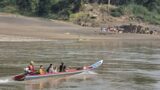
Many students described how poor road conditions and inclement weather hampered their efforts.

Ken Saro-Wiwa: A Legacy Remembered

I just had lunch with my friends—most of whom have been my friends for at least 15 years, and who became my friends because of our common work for human rights and environmental justice.  We came together today to remember Ken Saro-Wiwa and the Ogoni 9, who were hanged 15 years ago today in Nigeria for their nonviolent protest against Shell’s destruction of their homeland.

This was a different kind of lunch meeting than we’re accustomed to in DC, home of the quintessential power lunch. Honestly, how often do seasoned activists and NGO leaders from EarthRights International, Oil Change International, Amnesty International, Sierra Club and so many other groups sit around the same table specifically to NOT network, strategize and plan?  Of course, a little of that snuck in…  But mostly we spent our time sharing memories of how these unbelievable executions changed us.  It was a rare time to reflect, remember, mourn, and yes, celebrate, the work that we do and remember the life and legacy of a person whose work is still so important and relevant in today’s world.

Like us, communities, the media, organizations, and friends around the world gathered to remember the executions in different ways.  Not all of these events were as cost-free as ours.  Ogoni in Port Harcourt held a candlelight vigil as they do every year on this day.  The Nigerian mobile police reportedly opened fire on this peaceful assembly.  

In the UK, Remember Saro-Wiwa has launched a “Fifteen Years On” podcast which you can listen to or download for free.

The Guardian UK published newly disclosed documents from ERI’s lawsuit Wiwa v. Shell, exposing Shell’s post-execution PR strategy to rebrand its image in the face of international outrage, and threats of boycotts and legal action.

Pages

Subscribe to RSS - blogs