
As climate action, civil rights, and environmental protection are increasingly under threat in the U.S., we joined our partners to reflect on our longstanding work supporting community-led advocacy and lessons for the broader climate justice movement.
On May 29, EarthRights International and our partner organization, the Unitarian Universalist Service Committee (UUSC) hosted a powerful panel discussion on climate justice and community resilience in Cambridge, Massachusetts. It was a space that sparked energy, deep reflection, and a call for continued global and local action.
The conversation built on years of strategic partnership between EarthRights and UUSC to support efforts by Black and Indigenous communities in the U.S. – who bear the worst effects of climate change despite having contributed the least to the crisis – to protect their rights and advance their visions of climate resilience.
Through the Legal Justice Coalition, which is co-facilitated by UUSC, EarthRights supports Indigenous communities in Southeast Louisiana to protect coastal resources and continue cultural traditions in the face of rapid land loss. Our successful collaboration with UUSC has also led to coordination with Unitarian Universalist churches on our access to clean water campaign in North Carolina and to amplifying Indigenous voices at the Inter-American Court of Human Rights.
The panel discussion highlighted the core principle that centering frontline communities and transnational solidarity are key to building lasting and equitable climate justice movements.
Building Global Solidarity with Local Voices
People on the frontlines of the climate crisis must be able to define and put into action exactly what climate justice means for them. As partners of frontline communities, our legal and advocacy strategies help elevate our partners’ visions for a just future for their communities to the decision makers who have long ignored their voices and violated their rights.
“The communities [we work with] get erased and oppressed, so sometimes justice looks like awareness, sometimes justice can be found locally, sometimes justice looks like international solidarity. Bottom line – the communities we work with set the terms,” said Alexis Yeboah-Kodie, Climate Resilience & Environmental Justice Legal Fellow, EarthRights.
Climate justice is not a one-size-fits-all solution, it requires unique strategies for each community. Salote Soqo, Director of Advocacy for Global Displacement at UUSC, and a Pacific Islander, discussed the specific challenges faced by vulnerable Large Ocean States, countries which have small land areas but which possess extensive amounts of maritime territory. Understanding and adapting to these complex local realities will strengthen our global fight.
Building trans-national solidarity across frontline communities impacted by the climate crisis is also key to building movement strength and transforming systems that perpetuate harms. This concept involves encouraging more individuals to stand together across borders, and support Black and Indigenous communities that face environmental, political, and economic challenges, despite diverse needs and demands.
Acknowledging and Exchanging Ancestral Knowledge Across Borders
The discussion delved into the importance of acknowledging historical work done by Black and Indigenous communities to protect their lands and community members from harm.
Black and Indigenous communities offer a wealth of wisdom that can guide broader climate action. Therefore, supporting Black and Indigenous community leadership is key to ensuring that the climate justice movement is both inclusive and effective.
Their historic activism must be recognized and built upon, to ensure that we don’t erase ancestral knowledge that might not fit into newer language paradigms used by the environmental justice movement today.
Panelists also discussed the vital knowledge that Black and Indigenous communities across the globe can share with each other to strengthen justice movements.
Black and Indigenous communities in the U.S. and abroad have been resilient in the face of centuries of environmental and social exploitation.
They also face similar threats and challenges – the devastation of their ancestral lands by powerful corporations. Understanding these shared challenges can strengthen trans-national solidarity and collaboration.
A Movement That Won’t Stop
The climate justice movement is far from fleeting. It is a force that continues gaining strength and power with every passing day.
“The climate justice movement is alive and nothing is going to stop it,” said Salote Soqo, Director of Advocacy for Global Displacement, UUSC.
Even in a context of rollbacks of rights and environmental protections, communities across the U.S. and around the world continue to fight for environmental justice. This fight will only grow as we strengthen transnational solidarity and amplify frontline voices that are demanding accountability from governments and corporations.
This conversation served as a vital reminder that in our pursuit of justice, we must recognize that Black and Indigenous communities are the original stewards of the land, and that solutions to the climate crisis are rooted deep within their knowledge and experiences.
Meet the Panelists:
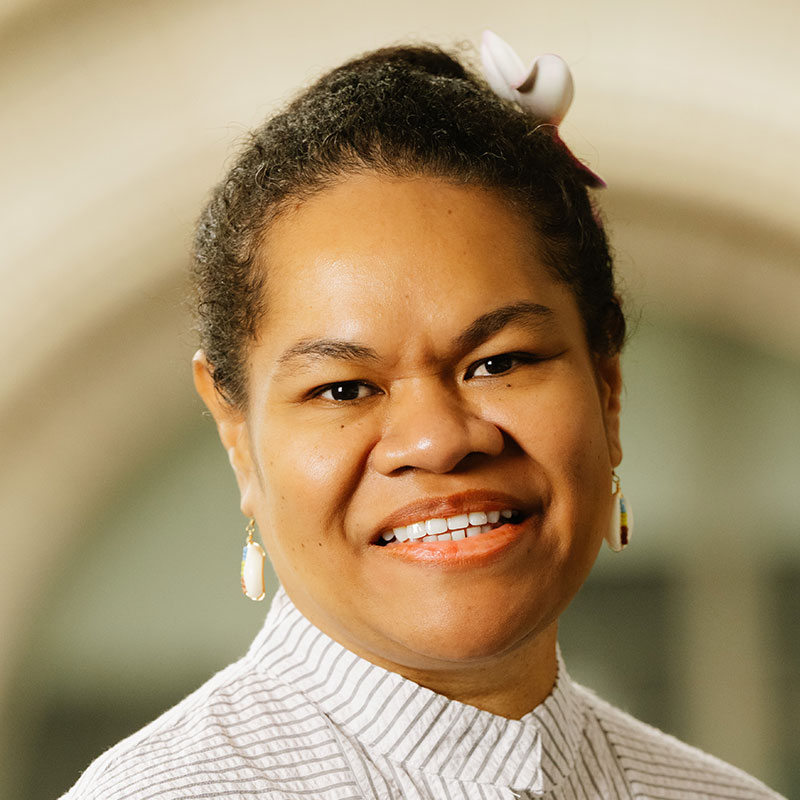
Salote Soqo – Director of Advocacy, Global Displacement, UUSC
Salote Soqo is the Director of Advocacy, Global Displacement at the Unitarian Universalist Service Committee (UUSC), where she leads the advocacy framework to advance rights-protection in national and international policies, laws, and practices to defend and protect human rights globally. With over two decades of community-based organizing, environmental management and climate justice experience, Salote has led initiatives addressing climate justice, grantmaking, strategy development and social justice activism, Salote has led disaster relief aid, the human right to water, civil and political rights protection in regions spanning the Pacific Islands, the United States, and the Caribbean.
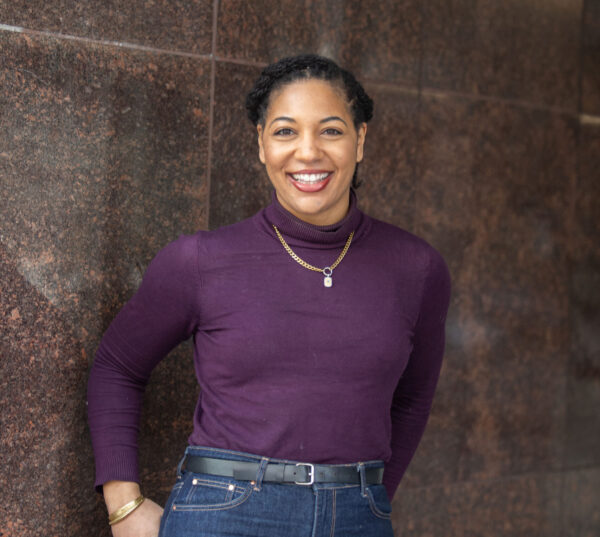
Alexis Yeboah-Kodie – Climate Resilience & Environmental Justice Legal Fellow, EarthRights International
Alexis Yeboah-Kodie is the Climate Resilience & Environmental Justice Legal Fellow at EarthRights International, where she assists Black and Indigenous frontline communities protect their land and water stewardship efforts and preserve their cultures and heritages. Alexis started her legal career as a Skadden Fellow, and then Staff Attorney, with the Justice and Accountability Center of Louisiana. Alexis has also worked with community and movement lawyering organizations both domestically and abroad on many issues, including police brutality, the privatization of public goods, and climate justice. During law school, Alexis provided her passion for community in Harvard’s International Human Rights clinic and in the Ghana Project clinic. She also served as the Co-Executive Director of the Prison Legal Assistance Project. Alexis earned her Juris Doctor from Harvard Law School and her BA in Psychology from Columbia University. She is admitted to practice law in Louisiana.
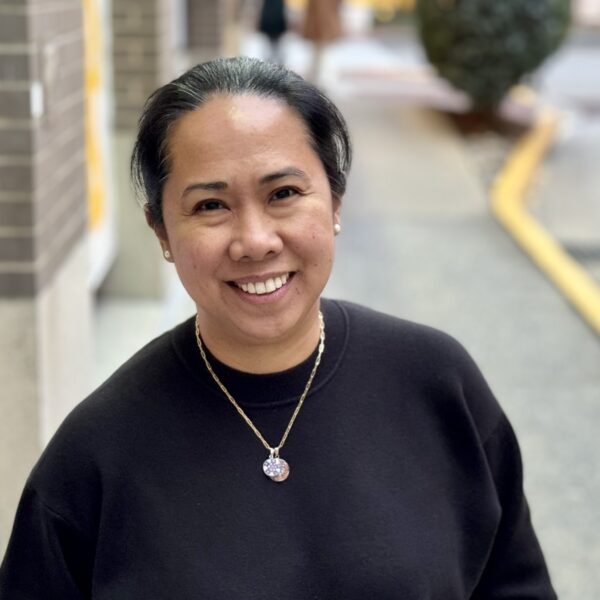
Bobbie Sta. Maria – Executive Director, EarthRights International
Bobbie Sta. Maria is the Executive Director of EarthRights International. She previously served as EarthRights’ Southeast Asia Legal Coordinator from 2011-2013 where coordinated the Mekong Legal Network, a regional network of human rights and public interest lawyers, using transnational legal strategies to address cross-border abuses; and helped build the foundation of the Myanmar legal program. As Director for Labor Rights and Asia at the Business & Human Rights Resource Centre, Bobbie led the expansion of the labor rights program. In addition to labor work, her diverse portfolio at the Resource Centre included the Asia and corporate legal accountability programs. During her time as Deputy Director for Strategy and Partnerships at Global Labor Justice-International Labor Rights Forum, she helped initiate a campaign that eventually led to the Dindigul Agreement to End Gender-Based Violence and Harassment. Most recently, Bobbie served as Program Director at the Sunrise Project, where she helped build the Sunrise Organizing Lab, which aims to scale the work of movements and networks in getting finance out of fossil fuels and towards clean energy solutions.

Rachel Gore Freed – Vice President of Programs, UUSC
Rachel Gore Freed serves as the Unitarian Universalist Service Committee’s Vice President of Programs. Rachel’s career has been spent working with frontline communities against corporate abuse, government inaction, and global systemic injustice. From supporting youth peacekeepers in Northern India, to litigating against Exxon for violations of community rights in the United States, Rachel has worked with activists and advocates communities all over the world. Rachel is also co-chair on the International Human Rights Funders Network and adjunct professor of law at Northeastern Law school’s Program on Human Rights and the Global Economy. In her local community, she serves as an advisor to her children’s Carlisle’s public school on diversity, equity, inclusion (DEI) and belonging. Rachel attended the George Washington University Elliot School of International Affairs and Vanderbilt University, with an undergraduate degree in International Development and a law degree, respectively.