Blogs

Xayaburi dam court decision prompts community consultation

Mining tailings on the Mekong River

A few weeks ago, Cook and I observed a consultation between Sor Rattanamanee Polkla, a Thai lawyer, and representatives from 8 communities (Chiang Rai, Loei, Nongkhai, Buangkarn, Nakonpanom, Mookdaharn, Aumnatcharoen and Ubon Rachthani), to discuss next steps in their fight against the controversial Xayaburi dam in Lao PDR. Last August, on behalf of the 8 communities, Sor filed a case in the Administrative Court of Thailand challenging the validity of the power purchase agreement between the Electricity Generating Authority of Thailand (EGAT), the buyer, and the Xayaburi Power Company Limited, the operator.  The power purchase agreement is driving the construction of the Xayaburi dam, which, if completed, will very likely impact and threaten the livelihoods of these downstream communities.

Sor has extensive experience working closely with communities in advocating for their rights. As Cook previously wrote, in conducting several community consultations during the course of this case, Sor is trying to use the Mekong River Commission’s Procedures for Notification Prior Consultation and Agreement (PNPCA), procedures that the National Energy Policy Council, Thai Cabinet, and EGAT shirked when signing and approving the power purchase agreement.

A Bump in the Road

Disappointingly, the Administrative Court of Thailand recently denied jurisdiction to hear the communities’ case, prompting this most recent urgent community consultation. The administrative court based its decision on three grounds:

  1. the plaintiffs are not considered injured persons as conditions and compliances set by the Cabinet before concluding the power purchase agreement are considered part of the internal administrative process;
  2. the power purchase agreement is binding for contractual parties, such as EGAT and the Xayaburi Power Company, therefore third parties like the plaintiffs are not considered injured persons; and
  3. although the defendants did not comply with PNPCA, such process is not considered an administrative act and therefore the court is not able to hear the case.

Nevertheless, this is not the end of the communities’ efforts to delay or halt the project. 

Indigenous leaders travel from Bolivia to DC to testify at the Inter-American Human Rights Commission

Yesterday, a delegation of indigenous leaders travelled from Bolivia to Washington, DC, to testify at the Inter-American Human Rights Commision's upcoming thematic hearing on the human rights situation in Bolivia's Isiboro Sécure National Park and Indigenous Territory (or TIPNIS, for its Spanish acronym). These leaders, from TIPNIS and the Indigenous Confederation of Eastern Bolivia (CIDOB), will present information about the threats posed by a Bolivian highway project to the human rights of TIPNIS’ indigenous peoples. Their testimony will be live-streamed on Friday at 3:15pm Eastern time.

ERI's legal team, together with our friends at RAMA, Fundación Construir, Amazon Watch, Due Process of Law Foundation and Georgetown University Law Center have organized a series of events this week to create awareness about the case and hopefully, to inspire more people to support them and their plea for justice. 

The TIPNIS park is the first conservation area to be recognised by Bolivian government in 1965 and it was also later recognized as indigenous territory in 1990. Despite these clear protections, for decades the Bolivian government has expressed an interest in traversing this biologically fragile zone to construct a road, the Villa Tunari – San Ignacio de Moxos highway, which would connect the lowland Amazon to the highlands.  Now there is enough funding and powerful geopolitical interests to push the construction forward. Even Bolivian President Evo Morales has heralded this highway as bringing progress and inaugurated its construction in 2011. Unfortunately for these developers, the TIPNIS park, and the ancestral home of several thousand Yuracaré, Chiman, and Moxeño indigenous peoples, lies right in the middle of their planned highway. 

With corporate accountability in limbo in the U.S., a small but significant victory in the Netherlands

In a small, but significant victory for corporate accountability, a Dutch court this week ruled that Shell Petroleum Development Company of Nigeria Ltd, a wholly-owned subsidiary of Royal Dutch Petroleum (Shell), must compensate a Nigerian farmer for losses resulting from a pipeline leak that poisoned farmland in the Niger Delta.

The suit against Shell Nigeria and its parent Shell, brought by Friends of the Earth Netherlands on behalf of Nigerian farmers, sought damages for widespread oil pollution caused by inadequate infrastructure maintenance.  Shell argued that the oil spills were a result of sabotage, not poor maintenance of its facilities. Although the court appeared to accept Shell’s argument, it concluded that Shell Nigeria could have easily prevented the sabotage.

Even though the court ultimately dismissed most of the claims brought by the Nigerian farmers against Shell Nigeria, and all of the claims against the parent corporation, the ruling is nevertheless a significant milestone. It marks the first time a multinational corporation has been found liable in Dutch court for damage caused overseas. The court examined the role of the parent company as well as the actions committed by Shell Nigeria, despite the fact that the link between Shell Nigeria and the Netherlands is limited.   

"Why I Support EarthRights International" - A Board Member's Story

I am always honored to hear how one of our supporters became acquainted with EarthRights International, and reminded of the many ways our work can affect people. Recently, my good friend Rebecca Rockefeller Lambert, Co-Chair of our board of directors, told our supporters how she discovered ERI. Her story, pasted below, is unique and humbling, and I hope you enjoy it as much as I did. Thank you for everything, Rebecca! And thank you to all of our supporters!

Subject: Why I Support EarthRights International

Dear ERI supporter,

It was just after Christmas, 10 years ago, that I embarked on my first journey East. My grandfather, David Rockefeller, invited my brother and me (age 22 and 24, respectively) to travel with him to Burma. I fell in love -

“The villages of Inlay Lake are so beautiful,” I wrote in my journal. “Light splashes on the houses, dancing with the waves. Corrugated, rust-colored roofs compliment the vast green and blue of water, and everywhere golden pagodas glint or stupas protrude.” I was moved by the people: the school children singing American nursery rhymes; vendors who painted thanaka on my face; my friend Moe Moe, who taught me to say “it’s okay,” (yabade), and “thank you” (jesutimbade).

It was this trip that brought me to EarthRights International, through which my love of Burma and her people has only deepened. Though I have not returned to Burma since that first trip, ERI has given me the opportunity to connect in other ways.

On my first trip with the board, I met the plaintiffs in ERI’s landmark Unocal case, who so bravely told their stories of rape, torture and murder, and won a slice of justice against a goliath U.S. corporation. Talk about speaking truth to power – these men and women are true heroes. Last year, with my fellow board members and a group of American supporters, we paired up with the students at the EarthRights School for Burma in Chiang Mai, Thailand and brainstormed solutions to specific problems faced across the border in Burma.

Colombian Prosecutors Reopen Criminal Investigation of Chiquita's Directors

According to a recent report, Colombian national prosecutors are reopening a previously closed criminal investigation into the role of the banana company Chiquita Brands International, Inc., and thirteen of its directors, in financing paramilitary violence, such as torture and extrajudicial executions, in the 1990s and early 2000s. Chiquita’s role in abetting paramilitary violence is the subject of ERI’s lawsuit Doe v. Chiquita.

In addition to Chiquita, six other banana companies, including Del Monte and Dole, reportedly will be subject to the prosecutor’s investigation.

In 2007, Chiquita pled guilty to U.S. federal criminal charges and paid a $25 million fine, for making more than 100 payments, totaling more than $1.7 million, to the paramilitary organization known as the AUC, which had been designated as a Foreign Terrorist Organization by the U.S. government.

Doe v. Chiquita and several other federal civil lawsuits target Chiquita’s role in funding, arming, and otherwise supporting paramilitary organizations in Colombia in their campaign of terror against trade unionists, banana workers, political organizers, social activists, and the civilian population in general. The lawsuits allege that Chiquita engaged in this practice of funding paramilitary activity amounting to crimes against humanity in order to maintain its profitable control over Colombia’s banana growing regions and to produce bananas in an environment free from labor disputes and social unrest. Judge Kenneth A. Marra of the U.S. District Court for the Southern District of Florida has ruled that despite objections from Chiquita, the claims for violations of international human rights should be allowed to proceed in federal court.

Help support Burma's future leaders

“I think what I have gained and learned from the program has really exceeded my expectations…It was the first time for me to be in this family style of school. In my previous schools I have not had this kind of exposure… that can really help us build relationships with and understand people from many different backgrounds.”

These were the words of Mu San Mon*, a young woman from Burma’s Mon ethnic minority, speaking about her own classmates at the EarthRights School Burma– Burma’s next generation of leaders who come from all over the country and its multitude of ethnic groups. During her time in our leadership training institute, while learning the skills she needs to become one of Burma’s frontline defenders of human and environmental rights, she develops friendships and understanding about the homes, cultures and values of the wide-range of Burma’s peoples. And when she graduates she joins the network of hundreds of EarthRights School alumni – not only from Burma, but also from Thailand, Cambodia, Vietnam, Laos and China – who share her vision of justice and sustainable and equitable development.  

ERSB classroom

Two weeks ago, President Obama made a historic visit to Burma – the first serving US president to ever do so – praising the country’s “remarkable journey” to democracy. Yet deep divisions remain as the communal violence in Burma’s southwestern Rakhine State escalates, causing thousands of refugees to flee their homes. Meanwhile, in the North the government’s brutal civil war with the Kachin people grinds on.

Group monitoring Trans-Amazonian Highway unveils new blog

Last year, we blogged about a worrisome plan for a proposed highway/railway project that would traverse the Peruvian Amazon and threaten the lives and livelihoods of indigenous peoples, including peoples living in voluntary isolation. This planned highway/railway, the Interconexíon vial Pucallpa-Cruzeiro do Sol, has been closely watched by a group of indigenous leaders and civil society organizations, called the Grupo Regional de Monitoreo de Megaproyectos de Ucayali.

We were excited to learn that the Grupo de Monitoreo recently launched a new website and blog dedicated to raising awareness around the project and its potential impacts. One of the first stories highlighted on the new website is a recent report published by the Instituto de Bien Común (IBC) which brings together eye witness accounts and testimonials attesting to the presence of peoples living in voluntary isolation in and around the proposed path of the project. Because one of the most common tactics employed by governments to justify the construction of megaprojects that might potentially threaten peoples living in voluntary isolation is to simply insist that they do not exist, and thus no harm can be done to them, this new report and website will likely become critical tools in the struggle against the project.

Injustices in investor-state arbitration are fueled by the arbitration industry, new report finds

A new report from Corporate Europe Observatory and the Transnational Institute details problems with the system of investor-state arbitration and charges that the arbitration industry - including law firms and arbitrators - are contributing to the injustices in the system.

Enshrined in a number of investment treaties between governments, investor-state arbitration allows private companies from one country who invest in another country to file a complaint against the host government if they feel they're being treated unfairly. The complaint is heard outside any court system, by a panel of arbitrators who issue a decision that is usually confidential and is supposed to be binding.

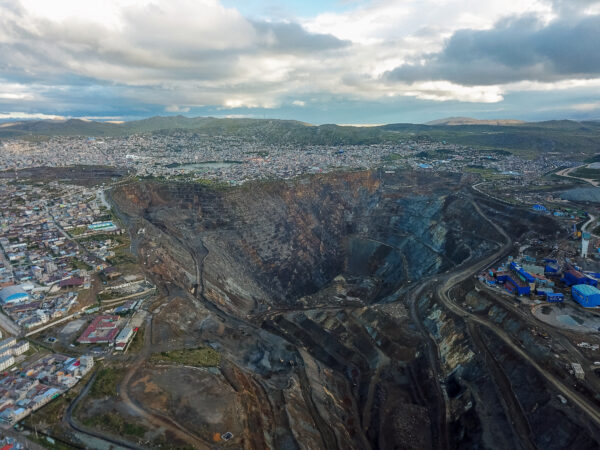
We have previously noted how arbitration is being abused by companies, including cases in which the US mining company Doe Run filed a complaint against the government of Peru arguing that it's unfair to subject them to Peruvian environmental laws, and a case in which Chevron has already succeeded in getting an arbitration panel to tell the government of Ecuador to prevent enforcement of a judgment for massive contamination of the Amazon, arguing that the Ecuadorian government has treated it unfairly in litigation in Ecuadorian courts.

The new report, "Profiting from injustice," studies the arbitration system in detail and concludes that both the policymaking of the arbitration process and the decisions in arbitration cases have essentially been captured by an industry that benefits from the increased use, and scope, of investment arbitration. A small club of arbitrators and investment lawyers control the discussion about the arbitration system, encouraging the inclusion of arbitration provisions and broad interpretations of these provisions, and profiting from the explosion of investor-state arbitration in recent years. And, the report charges, these lawyers even generate their own cases, pitching companies with ideas of suing governments.

Whose Declaration? Mekong students weigh in on highly criticized ASEAN Human Rights Declaration

My session on "Human rights in the ASEAN" with the students of the EarthRights School Mekong last week could not have been set at a better time. Just four days prior, the heads of the member states of ASEAN, the Association of Southeast Asian Nations, adopted the ASEAN Human Rights Declaration in Phnom Penh amidst protests against its highly opaque and uninclusive drafting process. I was eager to see how a group of young advocates, most of whom only started to formally learn about human rights at the Mekong School, would react to the final document. I intentionally made the class read and react first, before talking about how more established institutions have reacted.

"There is a section on Economic, Social and Cultural Rights. But why do I not see any cultural right? There is no paragraph on language."

"I don't see the word 'indigenous'."

"It uses 'every person' in most parts, but 'men and women' in the part on marriage. We are far away from gay marriage."

They saw beyond the seemingly harmless language of the Declaration.

BP was held accountable. What about Chevron?

This post was written by MIchelle Harrison, a Legal Fellow in ERI's U.S. office.

This week, as BP accepts responsibility for environmental damage and loss of life resulting from its 2010 oil spill in the Gulf of Mexico, Chevron continues to dodge accountability for the devastation it has caused in the Amazon. BP’s tragic spill is the largest in US history, but may pale in comparison to the disaster caused in Ecuador.

As previous blog posts here have highlighted, Chevron has been engaged in a long-running battle over enormous environmental and human health damage caused by oil drilling in Ecuador. After years of litigation, an Ecuadorian court last year imposed an $18 billion judgment on Chevron for deliberately dumping toxic waste into Amazon waterways used by indigenous groups for drinking water and causing massive destruction to the rainforest. Rather than accept responsibility, Chevron has engaged in all out war against anyone who has dared to be involved in the effort to hold the company accountable. When the $18 billion judgment came down, Chevron responded by suing more than 50 people who were involved in the suit, including the indigenous plaintiffs and their counsel, claiming they were part of a massive conspiracy to defraud the oil giant. Chevron has vowed it will never pay.

Pages

Subscribe to RSS - blogs